Angell, Robert Cooley
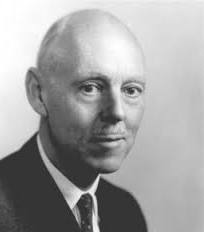
Bio: (1899–1984) American sociologist. He earned his doctorate at the University of Michigan, where he also spent his academic career until retiring. At Michigan, his mentor was his uncle, Charles Horton Cooley. Alongside Kenneth Boulding, Angell co-founded the Journal of Conflict Resolution and served as co-director of the Center for Research on Conflict Resolution. He also played a key role in establishing the Survey Research Center and the Research Center for Group Dynamics, and edited the American Sociological Review from 1946 to 1948. Angell chaired the sociology department from 1940 to 1952 and was president of the American Sociological Association in 1951. Internationally, he served as director of UNESCO’s Social Science Department in Paris, helped found the International Sociological Association, and later became its second president. From 1950 to 1956, he was also a member of the U.S. National Commission for UNESCO.
Angell’s doctoral dissertation on student life was later published as The Campus (1928), a study centered on undergraduate experiences. His early work examined how students adapt to new social environments and raised concerns about the use of universities to promote commercialized athletics. During the 1930s, his empirical research focused on the effects of the Great Depression on families, culminating in The Family Encounters Depression (1936). In this work, Angell pioneered the integration of small-scale case studies with large statistical surveys, beginning with student projects that documented family histories during the Depression using student essays as data. The growing influence of Nazi ideology on the social sciences in Germany further strengthened his commitment to intellectual freedom in sociological research. He advocated a sociology that was value-free in analysis yet ethically responsible in applying its methods to improve human welfare.
Following World War II, Angell returned to questions of social integration, this time concentrating on American society and urban life. He became well known for his studies of interpersonal relationships within groups and organizations, including businesses, churches, families, clubs, and other associations. In this context, he developed statistical measures of moral integration in cities, linking empirical research to theoretical issues recently articulated by Talcott Parsons in the study of social action. These efforts led to the creation of the Detroit Area Study as a combined teaching and research initiative, supported by the rapid expansion of the Institute for Social Research.
Main works
The Campus, a Study of Contemporary Undergraduate Life in the American University (1928);
The Family Encounters the Depression (1936);
The Integration of American Society (1941);
The Moral Integration of American Cities (1951);
Free Society and Moral Crisis (1965);
Peace on the March (1969);
The Integration of American Society: A study of Groups and Institutions (1975);
The Quest for World Order (1979).