Fukuyama, Francis
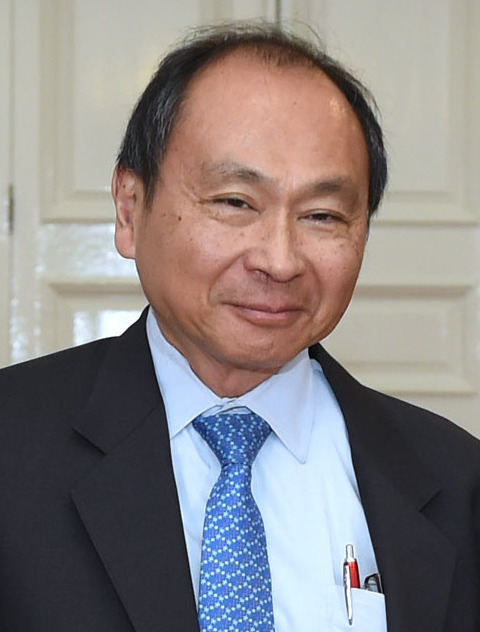
Bio: (1953-) American political scientist and political philosopher. Francis Fukuyama received his PhD in political science from Harvard University. After that, he joined the Rand Corporation (a political think tank close to the US government) as a policy analyst. Later, he worked at the Freeman Spogli Institute for International Studies, Stanford University, Johns Hopkins University, and George Mason University.
Fukuyama first garnered attention for his article „The end of History?: After the Battle of Jena” (1989), which he later refined and expanded and published as a book, The End of History and the Last Man (1992). This book became an instant bestseller, turning Fukuyama into a famous public intellectual. The End of History and the Last Man argues that after the fall of Soviet Union and other socialist regimes liberal democracy proved to be the best political and economic form, and may represent the final stage in the evolution of political ideas, not because events or conflicts cease, or because all countries would necessarily became liberal democracies, but because no superior ideological alternative remains.
Drawing heavily on Georg Wilhelm Friedrich Hegel, Fukuyama claims that human beings are driven not only by material needs but, more fundamentally, by a desire for recognition—being acknowledged as equal and dignified. This desire for recognition underpins both the moral foundation and the spread of democracy. Nondemocratic regimes deny recognition, producing resentment and motivating people to demand dignity through democratic systems. Liberal democracy, combined with capitalism, is seen as the most effective system because it satisfies both key human desires: capitalism generates wealth, while democracy ensures political freedom and equal recognition.
Fukuyama contrasts his view with that of Karl Marx, rejecting Marx’s materialism in favor of Hegel’s emphasis on ideas and recognition. He also draws on Plato and Alexandre Kojève, introducing the concept of thymos (spiritedness). This includes megalothymia (the desire for superiority) and isothymia (the desire for equality). History, in this view, is shaped by the tension between these drives. Liberal democracy succeeds because it reconciles them by promoting equality while channeling ambition into economic competition rather than domination.
Fukuyama also argues that capitalism has adapted to overcome its internal contradictions, as suggested by Kojève, and that the global spread of liberal democracy has reduced ideological conflict and war among major powers. However, he cautions that this “end of history” may create new problems. Excessive equality and comfort could suppress ambition, producing passive individuals—what Friedrich Nietzsche called “last men.” Without meaningful outlets for excellence and achievement, societies risk stagnation or decline. Thus, while liberal democracy may be the endpoint of ideological development, Fukuyama warns that it is not guaranteed to remain stable or fulfilling.
In his next book, Trust: The Social Virtues and the Creation of Prosperity (1995), Fukuyama shifts focus from political ideology to the cultural foundations of economic success, arguing that trust is a key precondition for prosperity. He defines liberal democracy as a system that protects basic rights and is based on consent through free and fair elections, but emphasizes that political structures alone are not enough—social cohesion matters just as much. Fukuyama argues that trust promotes cooperation, reduces the need for costly regulation, and enables complex economic organization. While cooperation can exist without trust, he maintains that high levels of trust make large-scale, efficient collaboration much easier, especially in modern economies where most activity occurs within organizations rather than through individuals. This trust stems from shared moral values and social norms, which he calls “social capital,” and which are not simply the result of rational calculation.
A central part of the book is his distinction between “high-trust” and “low-trust” societies. High-trust countries, such as the United States, Germany, and Japan, have strong civil societies with many voluntary associations that exist between the family and the state. These societies are better able to build large, flexible corporations and sustain economic growth. In contrast, low-trust societies like China, France, and Italy rely heavily on family ties or state structures, with fewer intermediary institutions. This limits their ability to develop large-scale enterprises, as economic activity tends to remain confined to small, family-run businesses. Fukuyama also challenges the idea of a unified model of Asian economic success, highlighting differences between countries like Japan and China. He argues that weak trust beyond family networks may hinder China’s long-term growth, especially without stable legal institutions. Overall, Fukuyama concludes that economic success depends not only on markets and technology but also on fragile cultural factors like trust, warning that declines in social capital—even in advanced democracies—could undermine prosperity.
Fukuyama, in State-Building: Governance and World Order in the 21st century (2004), explores the best way to implement state institutions in the developing countries to assure lasting stability and prosperity for their citizens. He labels strong, well-functioning state institutions as "stateness." He examines causes of state weakness and what impact weak states have on the international order. Fukuyama concludes that “failed or weak” states represent danger for the world order, and that military, political, and economic interventions by the US are justified if they produce a successful transfer of institutional capacity and know-how to those weak states.
Fields of research
Actors Agriculture Bureaucracy Capitalism Character, Social Conflict Conservative Ideology Cooperation Corruption Crisis Culture Customs, Social Democracy Dictatorship Economy Education Entrepreneurship Freedom History Identity Ideology Individualism Industry Inequality, Social Institution and Organization Integration Knowledge Liberalism Modernity and Modernization Politics Rationality Revolutions Social Capital Socialism Solidarity State Technology Tolerance TrustMain works
„The end of History?: After the Battle of Jena”, in The National Interest (1989);
“Reply to my critics”, in The National Interest (1989);
The End of History and the Last Man (1992);
Trust: The Social Virtues and the Creation of Prosperity (1995);
“Social capital and the global economy”, in Foreign Affairs (1995);
The Great Disruption: Human Nature and the Reconstitution of Social Order (1999);
Our Posthuman Future: Consequences of the Biotechnology Revolution (2002);
State-Building: Governance and World Order in the 21st century (2004);
America at the Crossroads: Democracy, Power, and the Neoconservative Legacy (2006);
After the Neo Cons: Where the Right went Wrong (2006);
Falling Behind: Explaining the Development Gap Between Latin America and the United States (2008);
The Post-American World. And the Rise of the Rest (2009);
The Origins of Political Order: From Prehuman Times to the French Revolution (2011);
Political Order and Political Decay: From the Industrial Revolution to the Present Day (2014);
Identity: The Demand for Dignity and the Politics of Resentment (2018);
Liberalism and Its Discontents (2022).