Geddes, Patrick
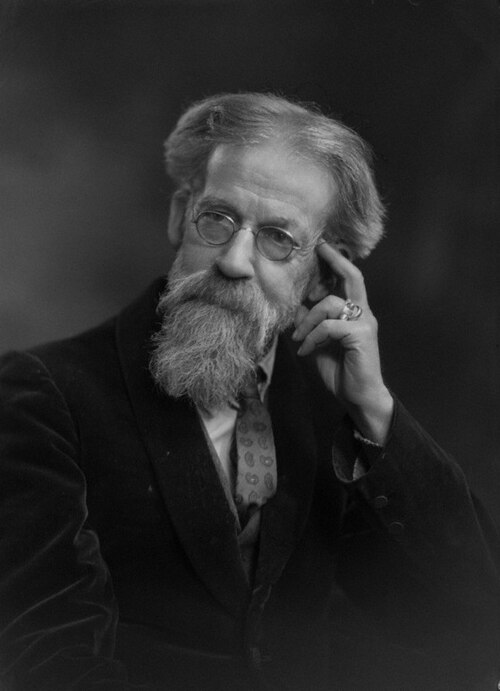
Bio: (1854–1932) British biologist and sociologist. Patrick Geddes was trained in biology in London and served as professor of botany at University College Dundee in Angus from 1889 to 1919. He later held the position of professor of sociology and civics at the University of Bombay between 1920 and 1923. In 1903, together with Victor Branford, he founded the Sociological Society of London, largely to promote his own theoretical perspectives.
In The Evolution of Sex (1889), Geddes maintained that the emergence of sexual reproduction represented a crucial stage in biological evolution. In his later career, his interests shifted increasingly toward sociology and urban planning. His work in these fields was strongly shaped by Charles Darwin’s evolutionary and ecological ideas and their application to social life, as well as by the theories of Frédéric Le Play, who emphasized the close relationship between place, work, and community. Geddes believed that the development of human communities was fundamentally biological, arising from interactions among people, their environment, and their forms of activity. His central aim was to examine the ecological impact of the environment on human settlements. Approaching sociology from a regional perspective, he situated social phenomena within their natural surroundings and understood cultural processes of “synergy” as formative forces in regional social organization. He analyzed urban social dynamics and introduced the concept of “conurbation” to describe modern metropolitan–industrial regions. Geddes exerted a lasting influence on urban planning theory and practice, as well as on social policy.
Main works
The Evolution of Sex (1889);
City Development (1904);
Cities in Evolution (1915);
Report to the Durbar of Indore, 2 vols. (1920).