Urry, John
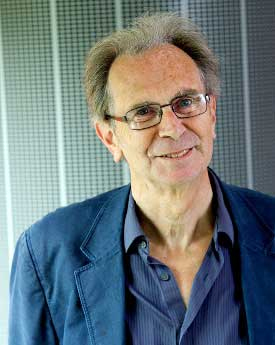
Bio: (1946-2016) British sociologist. John Urry received his PhD from Christ’s College, Cambridge, in 1967, and after that started lecturing at Lancaster University, where he stayed until his death. He was the founding co-director of the Institute for Social Futures at Lancaster and a founding member of the British Academy of Social Sciences. Urry is known for his contributions to social theory, sociology of tourism, sociology of mobilities, sociology of climate change, and for the promotion of complexity theory in social sciences.
Critical Realism
Early in his career, John Urry was a strong advocate of a critical realist approach in the social sciences. In Social Theory as Science (2nd ed., 1982), he argues that Marxist sociology can be considered scientific because it seeks to identify and model the underlying structures and processes shaping social life, and then tests and refines these models using empirical evidence.
On the other hand, and in contrast to positivist perspectives, critical realism does not dismiss interpretive sociology as unscientific. Instead, it holds that examining unobservable elements such as meanings, intentions, and motivations is compatible with scientific inquiry. Urry emphasizes that social events and causal mechanisms always occur within structured contexts, where deeper underlying forces shape observable outcomes. Urry defines structure as a “system of relationships which underlie and account for the sets of observable social relationships and those of social consciousness”.
Disorganised Capitalism
Scott Lash and John Urry co-authored The End of Organized Capitalism (1987), where they argue that, contrary to expectations outlined by Karl Marx and Max Weber, advanced capitalist societies have shifted away from increasing order toward a phase they call “disorganized capitalism.” Focusing on countries such as Britain, the United States, France, West Germany, and Sweden, they analyze how changes in space, class, and culture have reshaped capitalist social relations. Their findings point to trends such as the decentralization of capital within nation-states, a growing separation between banks, industry, and government, and shifts in patterns of production and class-based residential organization. They also emphasize that differences between national forms of capitalism reflect how each country historically developed its own version of organized capitalism.
According to Lash and Urry, by the 1980s, earlier forms of organized capitalism had been replaced by new patterns of investment and growth that disrupted traditional class structures. As markets increasingly focused on product differentiation and segmentation, class-based identities weakened, while lifestyles became more prominent. However, these lifestyles no longer clearly signal belonging to specific social groups. Instead, in an economy centered on information, services, and symbolic exchange rather than industrial production, lifestyles have become more reflexive and self-expressive, shaped by individual choices rather than fixed class positions. This shift also echoes revisions of Pierre Bourdieu’s ideas, highlighting divisions within the middle class between older and newer cultural orientations.
In Economies of Signs and Space (1994), Lash and Urry extend this analysis, arguing that contemporary capitalism is even more effective at commodifying everyday life. Areas once considered natural—such as health, identity, and the body—have become key sites of consumption. This has led to the expansion of industries like private healthcare, wellness tourism, specialized diets, and over-the-counter health products, reflecting the growing commercialization of personal well-being in late modern societies.
Sociology of Tourism
In The Tourist Gaze (1990), John Urry places visual experience at the center of how tourism is understood. He argues that under the “tourist gaze,” cultural practices, local environments, landmarks, and artifacts are transformed into objects for consumption. Tourists approach destinations with expectations of encountering something “exotic,” and these expectations shape how places are presented and experienced.
Urry draws a parallel with Michel Foucault’s idea of the medical gaze. Just as the medical gaze is structured, systematic, and guided by professional expertise, the tourist gaze is also socially organized and directed—though in this case toward the pursuit of novel and unfamiliar experiences. These experiences often disrupt everyday norms, offering encounters that feel different from routine social and environmental interactions. Urry later expanded on these ideas in Touring Cultures (1997) and Tourism Mobilities (2004), further exploring how tourism is shaped by movement, perception, and broader social processes.
Mobilities
Starting with the book Sociology Beyond Cities: Mobilities for the Twenty-First Century (2000), and continuing with Automobilities (2004), Mobile Technologies of the City (2006), Mobilities, Networks, Geographies (2006), Mobilities (2007), Aeromobilities (2009), and Mobile Methods, Mobile Lives (2010), Urry introduced and advocated for the use of “mobilities paradigm” in social sciences. He also founded the journal Mobilities in 2006 and founded and directed the Centre for Mobilities Research at Lancaster University. The mobilities paradigm suggests that advances in transportation and communication technologies have made it easier to maintain connections across distance, and that these dispersed, occasional links play a vital role in sustaining social life.
Complexity Theory and Globalization
In the early 2000s, John Urry started using an interdisciplinary approach known as “complexity theory”, as reflected in his book Global Complexity (2003) and article “The Complexity Turn” (2005). He argues that complexity theory offers valuable concepts and metaphors for understanding the highly dynamic and often disorderly nature of the contemporary world. Social relations, in this view, are not linear or predictable but instead involve intricate interactions, including both negative and especially positive feedback loops.
Urry suggests that globalization should also be analyzed from the complexity perspective, as a set of interconnected, evolving systems that continuously adapt and influence one another. These systems are marked by unpredictability, irreversibility, and constant change, lacking any stable equilibrium or fixed order. Rather than producing a neatly organized global structure, they generate a mix of order and disorder—creating a world that is complex and unstable, yet not entirely chaotic.
This perspective leads Urry to propose a “sociology beyond societies,” reflecting the declining relevance of the nation-state as the primary unit of analysis. As globalization reshapes social life, the traditional idea of society as a bounded, territorial entity becomes less convincing, raising broader questions about the foundations of sociology itself. In this new framework, key concepts include space (understood as shifting social topologies), regions (and their competitive dynamics), networks (as emerging forms of social organization), and flows or “fluids” (such as global enterprises). Central to all of this is mobility: globalization is driven by the complex and often unpredictable movement of people, goods, images, and capital across regions, without clear beginnings or endpoints.
Sociology of Climate Change
In Climate Change and Society (2011), John Urry argues that sociology is essential for understanding both the causes of climate change and how to address it. He criticizes the dominance of economics in this debate, which tends to view individuals as rational consumers making calculated choices. Instead, Urry emphasizes that human behavior is shaped by social routines, habits, and collective practices embedded in institutions such as families, work, and social networks. Because of this, simply changing economic incentives is unlikely to significantly alter behavior.
Urry also stresses that social and material worlds are deeply interconnected, especially in the case of climate change, which is driven by human activities like greenhouse gas emissions. He highlights that the recognition of climate change as a major issue was not automatic but shaped by political and social factors. Acceptance was delayed by fragmented scientific knowledge and resistance from powerful interests, including fossil fuel industries, certain governments, and what he describes as a “carbon military-industrial complex.”
Urry critically examines sociology’s historical neglect of ecological issues. While early thinkers like Karl Marx and Max Weber recognized the importance of natural resources, Urry argues that sociology largely assumed societies could detach themselves from environmental limits. This led to a form of “carbon blindness,” where the discipline overlooked the dependence of modern life on finite fossil fuels. Affluent societies, in particular, have sustained “high-carbon” lifestyles based on continuous growth, mobility, and consumption.
Urry suggests that a new phase—“resource capitalism”—is emerging, marked by growing awareness of environmental limits and the unsustainability of past economic practices. Modern societies rely heavily on oil-dependent transport systems, such as cars and air travel, which have shaped urban development and everyday life, especially in countries like the United States. High mobility underpins consumer culture, social relationships, and economic activity, generating what Urry calls “network capital,” where movement itself becomes a valuable resource. However, these patterns are unsustainable. Fossil fuel depletion (peak oil) and climate change threaten existing lifestyles, while interconnected global systems are increasingly vulnerable to crises, as seen in the 2008 financial collapse. Urry warns of potential “tipping points” and cascading failures.
Given these risks, he argues that traditional governance approaches are insufficient to solve climate change. Instead, sociology should focus on “post-carbon” futures, exploring how low-carbon ways of living can become desirable and socially embedded. This requires not only technological innovation but also profound changes in social practices. For example, in After the Car (2009), Urry envisions alternatives to private car ownership, such as shared, energy-efficient vehicles. Ultimately, he sees sociology as crucial for understanding both the origins of high-carbon societies and the pathways toward more sustainable ones.
Main works
Reference Groups and the Theory of Revolution (1973);
Power in Britain, Heinemann Education (1973);
Social Theory as Science (1975);
The Anatomy of Capitalist Societies (1981);
“Duality of Structure: Some Critical Issues”, in Theory, Culture & Society (1982);
Capital, Labour and the Middle Classes (1983);
Social Relations and Spatial Structures (1985);
Localities, Class, and Gender (1985);
The End of Organized Capitalism (1987);
Contemporary British Society (1988);
Localities, Policies, Politics. Do Localities Matter? (1990);
Restructuring. Place, Class and Gender (1990);
The Tourist Gaze (1990);
Economies of Signs and Space (1994);
Leisure Landscapes, Main Report and Background Papers (1994);
Consuming Places (1995);
Touring Cultures (1997);
Contested Natures (1998);
Sociology beyond Societies (2000);
“The Global Complexities of September 11th“, in Theory, Culture & Society (2002);
Global Complexity (2003);
Tourism Mobilities (2004);
Automobilities (2004);
“The Complexity Turn”, in Theory, Culture & Society (2005);
“The Complexities of the Global“, in Theory, Culture & Society (2005);
Mobile Technologies of the City (2006);
Mobilities (2007);
Aeromobilities (2009)
Mobilities, Networks, Geographies (2006);
Mobile Methods (2010);
Mobile Lives (2010);
Climate Change and Society (2011);
Societies Beyond Oil (2013);
Offshoring (2014);
What is the Future? (2016).