Booth, Charles
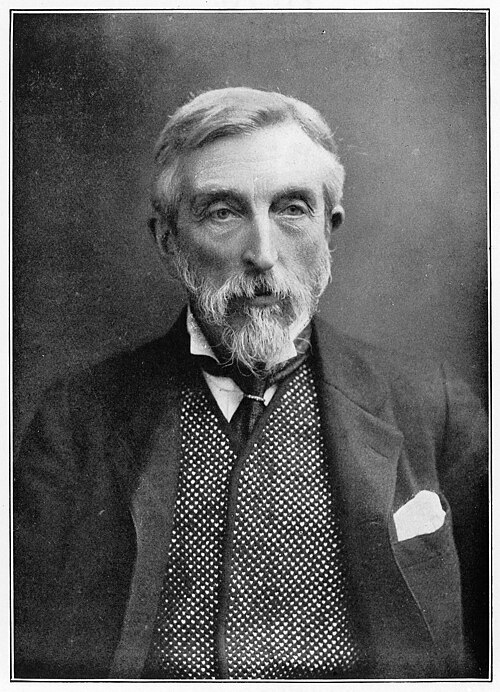
Bio: (1840-1916) British businessman, sociologist, and social reformer. Booth was born in a wealthy shipowning family, and with his brother Alfred started their own shipping service, with Charles Booth serving as chairman until his retirement. Large financial resources that Booth had allowed him to organize several pioneering large empirical surveys concerning industry and religion, and the poor economic and social conditions of the working population in English cities. The product of these surveys was the book Life and Labour of the People in London (1889–91, 1892–97, 1902), published in seventeen volumes. Booth's goal was not only to understand poverty, but to alleviate poverty. He had a significant contribution to the enactment of the Old Age Pensions Act of 1908 and was a member of the Royal Commission on the Poor Law from 1905 to 1909.
Life and Labour is organized into three main thematic areas: poverty, industry, and the influence of religion. In this work, Booth examined the living conditions of different social classes, seeking to identify the causes of poverty and to demonstrate the connection between poverty and moral degradation, as well as the link between stable income and respectable living standards. He concluded that regularity of income was the most significant factor in determining whether individuals fell into poverty. Among the 4,076 impoverished individuals he investigated, Booth found that 62 percent earned low or irregular wages, 23 percent were burdened by large families or ill health, and 15 percent wasted their income, drank excessively, or refused to work.
In conducting his research, Booth drew on records from schools and charitable organizations. Life and Labour also includes a series of detailed maps of London, using different colors to represent varying levels of poverty on each street.
Main works
Life and Labour of the People in London, 17 vols. (1889–91, 1892–97, 1902).