Putnam, Robert
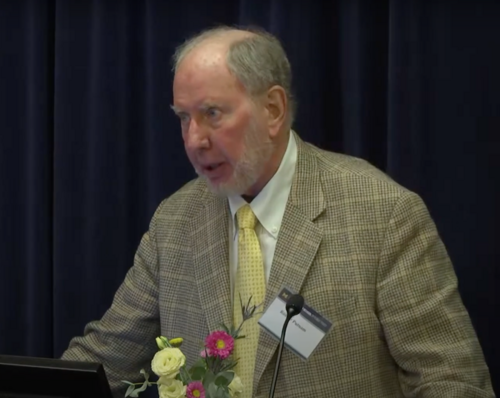
Bio: (1941- ) American political scientist. Robert Putnam earned a doctorate from Yale University. After a short stint lecturing at the University of Michigan, he moved to Harvard in 1979, where he is still currently working.
Robert D. Putnam has explored how national traditions and ideological styles shape political decision-making in works such as The Beliefs of Politicians (1973) and Bureaucrats and Politicians in Western Democracies (1981). In The Comparative Study of Political Elites (1976), he examined political leadership in advanced democracies, showing that elites are not unified groups but instead consist of intricate networks that both compete and cooperate with one another.
Despite these contributions, Putnam is most widely recognized for his research on social capital, particularly his argument that high levels of trust, networks, and civic engagement play a crucial role in enhancing societal well-being and improving the effectiveness of government.
Making Democracy Work
Putnam played a key role in shaping the study of social capital by emphasizing its institutional and communitarian dimensions. In Making Democracy Work (1993), he and his colleagues analyzed the performance of 20 regional governments established in Italy in 1970. Despite having similar financial resources, these regions varied significantly in their effectiveness. Putnam found that regions with higher levels of social capital—characterized by strong civic participation, trust, solidarity, tolerance, and dense networks of associations—tended to govern more successfully.
These regions were able to foster productive collaboration between citizens and government, leading to better policy outcomes and stronger economic development. In contrast, regions with weaker civic traditions often struggled to perform effectively. After accounting for factors such as political ideology and revenue levels, Putnam concluded that the most reliable predictor of governmental success was a well-established tradition of civic engagement, measured through indicators like voter turnout and membership in voluntary organizations.
He defines social capital as the features of social organization—such as trust, norms, and networks—that enhance societal efficiency by enabling coordinated action. Putnam also argues that governments can function more effectively with less direct intervention when citizens are willing to cooperate and uphold shared norms. His research further shows that institutions capable of building horizontal connections across diverse groups help strengthen trust and civic integration, ultimately supporting more effective governance.
Bowling Alone
Putnam’s work in Italy led him to research declining social capital in the United States.In Bowling Alone: The Collapse and Revival of American Community (2000), building on his earlier article “Bowling Alone: America’s Declining Social Capital” (1995), Robert D. Putnam explores the concept of social capital and its decline in the United States. He defines social capital as the networks, norms of reciprocity, and trust that arise from social connections. Like other forms of capital, it can grow or diminish over time. Social capital is reflected in everyday activities such as participating in clubs, engaging in community organizations, socializing beyond the family, volunteering, and taking part in political and civic life.
Putnam argues that social capital benefits both individuals and society. Individuals with strong social ties tend to be happier and have better access to opportunities, such as employment. At the societal level, dense social networks foster cooperation, trust, and mutual obligation. In smaller or tightly knit communities, people act generously with the expectation of reciprocity, building reputations and reinforcing trust. In larger societies, this dynamic evolves into what Putnam calls “generalized reciprocity,” where individuals act with consideration for others without expecting direct returns. Such trust-based systems make societies more efficient and cohesive.
Civic engagement plays a central role in generating social capital. Participation in voluntary associations—such as sports clubs, unions, and cultural groups—helps individuals connect and collaborate, increasing their capacity to achieve shared goals. Communities with strong institutional structures tend to experience greater civic involvement, which in turn promotes economic prosperity and resilience. Putnam presents evidence that regions with higher social capital enjoy better outcomes: cleaner and safer public spaces, improved health, stronger educational performance, and lower crime rates. He also links social integration to lower suicide rates, echoing insights from Émile Durkheim.
Trust is a key element, not only between individuals but also between citizens and government. High levels of political trust support effective democracy, while widespread distrust can weaken social cohesion and institutional stability. Although Putnam acknowledges that tight-knit groups can sometimes foster exclusion or intolerance, he finds that active civic participation generally correlates with greater openness and tolerance. To clarify these dynamics, Putnam distinguishes between two types of social capital: bonding and bridging. Bonding social capital strengthens ties within homogeneous groups but can be inward-looking. Bridging social capital, by contrast, connects diverse groups and facilitates the flow of information and cooperation across social divides. Healthy societies require both forms.
The central argument of Bowling Alone is that modern individualism has significantly eroded social capital in the United States. Over recent decades, participation in civic, social, and political life has declined sharply—from reduced involvement in clubs and religious institutions to fewer social interactions and family gatherings. Putnam uses the metaphor of “bowling alone” to illustrate this shift away from collective engagement.
Putnam argues that social capital in the United States peaked between the late 1950s and mid-1960s and has steadily declined since. He supports this claim with extensive evidence across multiple areas of social and civic life. Political participation has decreased, with lower voter turnout and reduced involvement in political parties. Broader civic engagement has also weakened, as fewer people attend public meetings, sign petitions, or hold positions in community organizations. Religious involvement has declined modestly, while union membership has dropped sharply, along with participation in professional associations. Volunteering has also diminished, and although some organizations have gained members, active participation is often minimal. Similarly, participation in sports—especially team-based activities—has decreased, symbolizing a shift away from collective engagement. Informal social interaction has also declined. People socialize less with friends, neighbors, and even family members, as shown by fewer shared meals and gatherings. Surveys show a significant drop in public trust and changes in everyday behavior reflecting reduced social cohesion. Although some new forms of interaction—such as self-help groups, phone communication, and online communities—have emerged, Putnam concludes they largely reinforce existing ties or narrow interests rather than rebuilding broad, trust-based social networks.
This erosion of both formal and informal connections has weakened trust and norms of reciprocity, and has contributed to a range of social problems, including increased crime, political alienation, reduced life satisfaction, and weakened community bonds. Ultimately, Putnam warns that diminishing social capital creates a cycle of social disintegration, where weakened connections further exacerbate societal challenges.
Putnam acknowledges that reversing the decline of social capital is a difficult task, but he suggests several steps that could help address the problem. These include strengthening civic education, promoting community service among students, and fostering greater social interaction among part-time workers in the workplace. He also emphasizes the importance of urban planning that limits sprawl and supports stronger community ties. Additionally, he sees potential in using the internet not just for distant connections, but as a tool for building and maintaining local social relationships.
Better Together
In Better Together (2003), Robert D. Putnam and Lewis Feldstein explore various initiatives led by community actors that aim to strengthen social networks and bridge social divides, thereby increasing social capital. They highlight practical examples, such as the revitalization of local libraries in Chicago, where branches have evolved into active community hubs. These spaces now host adult reading groups and provide support for schoolchildren, including homework assistance, creating opportunities for interaction and connection.
Although such efforts are relatively small in scale and not a complete solution, the authors argue that they demonstrate the potential for meaningful progress. When combined, many similar initiatives could collectively enhance social capital and contribute to broader improvements in American society.
Fields of research
Actors Altruism Authority Bureaucracy Children Citizenship Civil Society Community Conflict Cooperation Crime Democracy Economy Elites Ethnicity Ideology Individualism Leaders Politics Power, Political Religion Social Capital Solidarity Sports Tolerance Trust VotingTheoretical approaches
CommunitarianismMain works
The Beliefs of Politicians: Ideology, Conflict, and Democracy in Britain and Italy (1973);
The Comparative Study of Political Elites (1976);
Bureaucrats and Politicians in Western Democracies (1981);
Hanging Together: Cooperation and Conflict in the Seven-Power Summits (1984);
Making Democracy Work: Civic Traditions in Modern Italy (1993);
Double-Edged Diplomacy: International Bargaining and Domestic Politics (1995);
„Bowling alone: America’s declining social capital”, in Journal of Democracy (1995);
Bowling Alone: The Collapse and Revival of American Community (2000);
Democracies in Flux: The Evolution of Social Capital in Contemporary Society (2002);
Better Together: Restoring the American Community (2003);
Staying Together: The G8 Summit Confronts the 21st Century (2005);
The Age of Obama: The Changing Place of Minorities in British and American Society (2010);
American Grace: How Religion Divides and Unites Us (2012);
Our Kids: The American Dream in Crisis (2015);
The Upswing: How America Came Together a Century Ago and How We Can Do It Again (2020).