Le Bon, Gustave
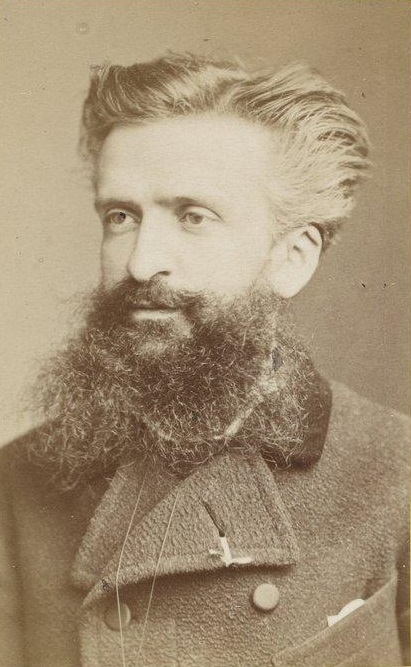
Bio: (1841-1931) French polymath, sociologist, psychologist, and anthropologist. Charles-Marie Gustave Le Bon received a doctorate in medicine, while his interests and works covered various natural sciences – physics, geology, biology, medicine – and social sciences – sociology, social psychology, demography, and anthropology. Le Bon never held an Academic position and acted as an independent scientist.
For social sciences, Le Bon’s biggest contributions relate to his studies of social psychology of the crowds, the relation between race and intelligence, patterns of alcohol and tobacco consumption, revolutions, and social movements. In his book The Psychology of Peoples (1894), Le Bon introduced his explanation for the hierarchy of races. According to him, different races are physiologically and psychologically distinct phenomena, with each possessing a distinct racial soul. Different races vary in their intellectual capabilities, ability to control their emotions and instincts, and in the power of their volition and attention. Races not only feel and think differently, but they are also unable to understand each other. Le Bon argued that history itself is the product of racial character. Social evolution is the product of mostly emotions and not intelligence, while true progress comes from the contributions of an intellectual elite.
In The Crowd (1895), his most popular work, Le Bon argues that when individuals participate in the crowd, a distinct irrational collective crowd mind prevails, following what he calls the “psychological law of mental unity”. He argues that mental homogeneity is a product of the contagion, which spreads like a disease among participants in the crowd. In crowds, people lose their individuality, while an individual’s conscious personality becomes submerged. Crowds are different from the individuals that participate in them, and are characterized by loss of inhibitions, unanimity, emotionality, irritability, impulsiveness, the absence of judgment, and incapacity to reason critically. Individuals who are in the crowd are much more likely to exhibit aggressive and anti-normative behavior. If the crowd has a leader, than other become his or her mindless puppets, ready to perform both nefarious and heroic acts.
Members in the crowd are much more likely to act illegally because the sheer size of the crowd prevents authorities from identifying every single participant. Le Bon contended that crowds are much more prominent in the modern world. He also believed that the effects of crowds are not always negative, as they can challenge and change society in positive ways, which wouldn’t happen without them.
Fields of research
Aggression Alcoholism Crowd Education Emotions Evolution History Individualism Instincts Leaders Movements, Social Politics Psychology Race Rationality Revolutions Socialism WarTheoretical approaches
Racist ApproachMain works
"The Psychology of Peoples (1894);
The Crowd: A Study of the Popular Mind (1895);
The Psychology of Socialism (1896);
The Psychology of Education (1902);
The Psychology of Politics and Social Defense (1910); ("")
Les Opinions et les croyances (1911);
The Psychology of Revolution (1912);
La Vie des vérités (1914);
The Psychology of the Great War (1915);
First Consequences of War: Mental Transformation of Peoples (1916);
The World in Revolt (1920);
The World Unbalanced (1923).