Dumazedier, Joffre
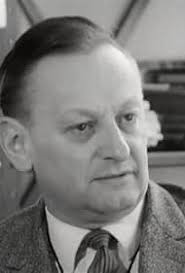
Bio: (1915-2002) French sociologist. Joffre Dumazedier studied linguistics at the Sorbonne and taught sociopedagogy at the University of Paris V. In 1946, he founded the popular education organization Peuple et Culture [People and Culture], and after that became head of a CNRS (Centre National de la Recherche Scientifique) research unit on leisure. In 1953, he created a research unit on the sociology of leisure and cultural models and directed it until 1984. In 1966, he founded the International Review of Sport Sociology journal.
At the start of his career, Dumazedier studied sport, with particular focus on the Olympic Games. Later, he widened his research to all types of leisure activities from a socio-historical perspective. He saw the rise of time and type of leisure activities as part of a historical and evolutionary trend in which time dedicated to work shrank from an average of 4,000 hours of work a year in pre-modern times to 1,600 in the second half of the twentieth century. This excess free time allowed people to enjoy engaging in sports and other types of leisure activities. He championed education and pedagogy and believed that society had to ensure ample access to education and culture to the masses, as the majority of leisure time should be spent in education.
Dumazedier showed how the dynamics of leisure contribute to social change by generating new sociocultural practices. He defined leisure dialectically, in opposition to various forms of work, and distinguished it from most family-centered, religious, and political activities. He identified three primary functions of leisure: relaxation, entertainment, and personal development, noting that entertainment can hinder the pursuit of personal development. The concept of balance—among these functions and other social factors—is central to his theory and is ultimately oriented toward individual self-development.
His book Leisure and Culture (1966) draws on data about cultural practices collected between 1954 and 1962 in the town of Annecy and is modeled on Robert and Helen Lynd’s influential anthropological study Middletown. In this work, leisure is portrayed as emancipatory, freely chosen, hedonistic, and personal.
In Educative Society and Cultural Power (1976), Dumazedier examines leisure and sociocultural action in terms of autonomy and dependence in relation to work, family, education, and spirituality, while emphasizing the growing importance of sociocultural professionals. Influenced by the writings of André Gorz and Ivan Illich, he explored new modes of knowledge acquisition grounded in autobiographical reflection and lived experience, which he termed autodidaxie.
In The Cultural Revolution of Free Time, 1968–88 (1988), Dumazedier introduced the concept of so-called ipsative social time (temps social ipsatif), defined as liberated time claimed by individuals and used for their personal development. Overall, Dumazedier viewed the expansion of leisure as a defining feature of modernity, which he analyzed through a post-Marxist theory of social time.
Fields of research
Culture Education Everyday Life Freedom History Knowledge Modernity and Modernization Sports TimeTheoretical approaches
Marxism – Post-Marxism (Neo-Marxism)Main works
Regards neufs sur les Jeux Olympiques (1952);
Vers une civilisation du loisir? (Toward a Society of Leisure, 1967);
Le Loisir et la ville, vol. I. Loisir et culture (1966);
Sociologie empririque du loisir. Critique et contre-critique de la civilisation du loisir (Sociology of Leisure, 1974);
Le Loisir et la ville, vol. II. Socie´te´ e´ducative et pouvoir culturel (1976);
La Re´volution culturelle du temps libre: 1968–1988 (1988).