Turner, H. Ralph
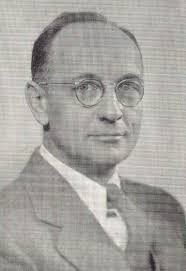
Bio: (1919-2014) American sociologist and social psychologist. Ralph Turner received his Ph.D. from the University of Chicago, with a dissertation focusing on race relations. He was a professor at the University of California, Los Angeles. He was the editor of the scientific journals Sociometry and the Annual Review of Sociology, and served as president of the American Sociological Association.
Turner studied collective behavior, social movements and their resource mobilization and strategies, race and ethnic relations, protests and riots, the social psychology of self and identity, the family and socialization, and the social dimensions of disasters, although he is probably most famous for his contributions to the role theory and role conflict. He used symbolic interactionism to formulate sociological social psychology. In the book Collective Behavior (1957), co-written with Lewis Killian and extensively updated in 1972 and 1987, the authors introduce the perspective of “emergent norm”, an integrated approach that theoretically connects dynamics of crowd behavior with the dynamics of social movements.
Turner has greatly contributed to the development of the role theory, as it was the focus of his first article, “The Navy disbursing officer as a bureaucrat” (1947), and since he returned to this topic in many of his articles, book chapters, and books. Inspired by symbolic interactionism, which depicted the self as simultaneously independent of other people and a reflection of them, Turner saw the self as forming via processes of role-making and role-taking. He perceived the role as a more processual and negotiated phenomenon, especially in the post war period when people started rejecting socially prescribed roles and behaviours associated with them, and engaged in creating new roles and behaviours according to their needs and desires. He also aknowleged that some roles carry inherent conflicting demands i.e. when some official role (job, position) specifies that a person has to follow both written rules and direct commands of their superiors, and a situation happens where commands of the superiors are in direct collision with the written rules of the role, conflicting demands bring apprihention, stress, and potential for negative repercusions.
Turner, in Waiting for Disaster: Earthquake Watch in California (1986), presented the results of longitudinal studies that examine how individuals interpreted and responded to new information about earthquake hazards and risks. The research also aimed to uncover the ecological and structural factors—such as social networks and community ties—that influenced whether some people were more likely than others to act on these predictions.
Fields of research
Actors Conflict Crisis Crowd Ethnicity Family Group Identity Institution and Organization Movements, Social Psychology Race Role, Social SocializationTheoretical approaches
Symbolic InteractionismMain works
“The Navy disbursing officer as a bureaucrat”, in American Sociological Review (1947);
Social Psychology: The Study of Human Interaction (1952);
Collective Behavior, 3rd ed. (1957, 1972, 1987);
“Role taking: Process versus conformity”, in A. Rose (ed.). Human behavior and social processes (1962);
The Social Context of Ambition (1964);
Robert Park: On Social Control and Collective Behavior (1967);
Family Interaction (1970);
“Deviance avowal as neutralization of commitment”, in Social Problems (1972);
“Ambiguity and interchangeability in role attribution”, in American Sociological Review (1976);
“The role and the person”. American Journal of Sociology (1978);
Social Psychology: Sociological Perspectives (ed.). (1981);
Waiting for Disaster: Earthquake Watch in California (1986);
“Role differentiation: Orienting principles” in E. Lawler (ed.). Advances in group processes (1988);
“Role change”, in Annual Review of Sociology (1990);
“Role Theory”, in Jonathan Turner (ed.) Handbook of Social Theory (2001).