San Juan, Abdel Hernandez
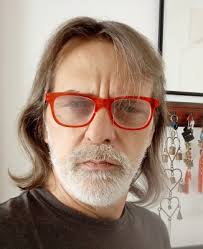
The Phenomenological Sociology of Abdel Hernandez San Juan: Ontogenesis and Radicality of a Thought
©by Alberto Méndez Suarez, 2022
REGARDING "THE CORRELATION OF THE WORLD" BY ABDEL HERNANDEZ.
FROM THE "LIFEWORLD" TO ITS TEXTUAL CORRELATE:
When, in the summer of 2022, Abdel Hernández shared with me a digitized copy in Word format of one of his four most important recent books, I was absolutely convinced, even without having read a single line, that I was facing a book of crucial importance to phenomenological thought in the 21st century. This prologue is the result of that reading, following an extensive year-long conversation during which I proposed to Abdel the publication of *The Correlate of the World*, the title with which the author summarized the essential thesis of his book.
1) The genesis of a world: its beginnings.
Cuban academic and philosophical thought of the second half of the 20th century (Lourdes Rensoli, Jorge Villate, Jorge Luis Acanda, Fernando Martínez, Pedro Luis Sotolongo, Eduardo Dominic, the recently deceased Emilio Ichikawa, Paul Ravelo), although largely restricted to the Marxist historiographical field (Moreno Fraginals, Eduardo Torres-Cuevas, Ana Cairo, Fernando Martínez, for example) and non-Marxist (Rafael Rojas and Emilio Ichikawa himself), or rather devoted to contemporary thought (Paul Ravelo, Emilio Ichikawa himself) from a poststructuralist perspective, has not known outside of that undoubtedly, albeit authentic, narrow framework of national thought, a more exclusive and exceptional transdisciplinary voice, from within and beyond the academic mainstream, due to its profound theoretical rigor and its hybrid character given its foreign influences from the Frankfurt School, French structuralism and poststructuralism, and North American semiotics and postmodern anthropology, as well as its own unique voice. metatheoretical, the one from which and where the work of Abdel Hernández San Juan (Havana, 1968) discourses and moves, distinctly cleared in Havana at the end of the 20th century and developed in its full breadth beyond its national borders in the United States as part of the North American academy itself, either as a visiting research anthropologist at Lake Forest College (faculty of sociology and anthropology), present as a speaker at the Chicago Anthropology Congress or as a complementary associate research professor at Rice University, anthropology faculty in Houston, Texas.
Abdel Hernández's theoretical thought emerged in the late 1980s in Havana, Cuba, as one of the youngest theoretical voices in visual and urban anthropology and conceptualist and post-conceptualist art criticism. At only twenty years old, he founded the first incidental and alternative school of practical and empirical ecocultural studies for young artists and emerging visual artists, simultaneously giving impetus to new modes of metatheoretical thinking that would validate his indisputable place in the Cuban cultural world before he began his great journey through the continent, leaving Cuba for Venezuela at the head of a traveling exhibition of young Cuban visual artists and then as a cultural anthropologist investigating popular markets in Venezuela, and later from there to the United States where he would reside for many years until becoming an active part of the academic and cultural life of Houston, Texas as a phenomenologist and cultural anthropologist.
Hernández's conceptual rigor has been deployed since his early youth and for decades in different fields of social sciences that run and interconnect and that dispute an indisputable place in epistemology, sociology, phenomenology, hermeneutics, anthropology, aesthetics and semiotics, concentrating with greater emphasis on the subfields of ethnomethodology, ethics, performativity theory, art theory and criticism and futurology.
From these areas of metatheoretical permanence, Hernández has attempted multiple epistemological inquiries and has also worked with effort and dedicated commitment to the development of his thinking in various locations on our continent (Havana, Caracas, Monterrey, Texas, Chicago, New York), contributing to extending, intersecting, strengthening and overlapping the fields of work with proposals that are still mostly unpublished, serious, rigorous and with singular specificity, organic and systemic.
Abdel Hernández's phenomenological work did not take off in Cuba, his natural, cultural, and intellectual birthplace, but, as I mentioned above, first in Venezuela and then in the United States. The latter proved defining in his subsequent authorial work and all his philosophical writing, which was conceived retroactively in a state of constant, rigorous, systemic, and systematic reflection. During his temporary return to Cuba, he undertook the task of methodically reconstructing his entire theoretical trajectory as a phenomenologist and ethnomethodologist, based on anthropological experiments conducted at Rice University in Texas, where he held a position as a research associate in the Department of Sociology and Anthropology. Abdel Hernández developed as a young researcher and visiting professor, and, along with Stephen A. Tyler, was a pioneer of the new direction or renewal that the postmodern anthropology movement acquired in the Department of Anthropology at Rice University in the late 1990s.
Hernández's philosophical thought has been systematically built upon a vast theoretical edifice, inspired by systemic and phenomenological approaches. Hernández consciously and consistently emphasizes the importance of "transdisciplinarity" as a methodological and procedural framework, observing and recording its impact on various theoretical experiments based on concrete results of theoretical exercises inspired by sociological aspects of the work of Max Weber, Pierre Bourdieu, and more recently by the phenomenological aspects of Alfred Schütz's ethnomethodological sociology, Herbert Georg Mead's sociology, Gadamer's hermeneutics, and Charles S. Peirce's semiotics.
Hernández's work resembles the exercise of theoretical experiments ranging from Gregory Bateson's metalogues, for example, to Clifford Geertz's fieldwork reports and especially, with greater emphasis, the theoretical achievements of Stephen Tyler's postmodern anthropology, to whose discussion Hernández has subjected his own scientific, anthropological, ethnomethodological, and epistemological research against the grain, thus contributing to its development in the field of semiotics, hermeneutics, and sociological phenomenology under the influence of the school of the Austrian sociologist Alfred Schütz.
Abdel Hernández began to lay his theoretical foundations on a solid comprehensive training that began in the second half of the 1980s with his studies in fine arts at the San Alejandro Academy in Havana, Cuba, where he researched and experimented on the social, anthropological and sociological effects of aesthetics in urban and visual anthropology and on the influence of the artistic avant-gardes of the 20th century and the North American post-avant-garde on performance and the young Cuban art of that time.
Hernández thus continued his professional and intellectual development in Caracas, Venezuela, during the 1990s, concentrating on social science studies at Venezuelan educational institutions and developing his own theoretical work as an art critic and researcher.
His studies and fieldwork in urban anthropology continued in the late 1990s when Hernández emigrated to the United States, settling in Houston, Texas, where he continued his anthropology and sociology research at Rice University and where he developed his ethnomethodological experiments, dividing his time between teaching and research and thus expanding the content and objectives of all his scientific research from a self-reflective perspective.
While in his early career Hernández had concentrated more on the study of French thought in general and very particularly on the work of Lévi-Strauss, Foucault, Baudrillard and Lyotard, especially the sociology of Pierre Bourdieu and its application in his own socio-scientific inquiry, Hernández had also been interested in the studies of the philosophy of culture of the theorists of the Frankfurt School, from whose results he had thus engaged in a theoretical dispute on the aesthetic reception of the European artistic avant-gardes and the effects of the North American post-avant-garde on the postmodern revolution of the younger post-conceptualist Cuban art, where Hernández himself had been interested with special emphasis on the theoretical reflection on conceptualism and postmodernism through the critical reflection of aesthetics, the Marxist debate, the theory of culture, and the sociology of art (Jameson), the sociology of knowledge (Bourdieu) and semiotics (Greimas, Eco, Todorov, Kristeva).
Later, Hernández himself would transcend the limits of his own sociological inquiry into art to investigate beyond this field into other related fields of the social sciences, such as the fundamental postulates of Charles Sanders Peirce's semiotics, as well as Alfred Schütz's phenomenological sociology or the methodology of communicative action in the critical philosophy of Jürgen Habermas's theory of performativity, one of the last and most prominent voices of the Frankfurt School that most decisively influenced Hernández's thinking, in addition to his enormous debt to Hegel's philosophy of logic, have laid the foundations of his current phenomenological and hermeneutical research.
It was in this way that Hernández, after emigrating to Venezuela and running parallel to his professional career as a researcher and art critic, began a continuous, meticulous and systematic reading and study of the phenomenological sociology of Alfred Schütz, the critical, performative and sociological theory of Jürgen Habermas, the study of symbolic interactionism of H.G. Mead, the literary, semiotic and anthropological criticism of Tzvetan Todorov, the hermeneutics of Gadamer and the poststructuralist grammatology and linguistics of Jacques Derrida and especially the semiotics of Charles Sanders Peirce, being directly influenced by epistemological moments and developments of some of the core works of this constellation of authors.
But his reading has not been done uncritically, but reflectively, and rather methodologically inspired by the theoretical insights of the French sociologist Pierre Bourdieu, since each text by Hernández is a particular, indeed singular, moment of subjectivation of each of the molecular concepts derived from the exegetical exercise of the texts, these being repositioned, in dialectical discussion with their own theoretical presuppositions and systematized in a new theoretical organism.
With these foundations, Hernández embarked on a new line of inquiry from the perspective of Schütz's hermeneutic phenomenology and Peirce's semiotics during his time in the United States. Once settled in Texas, his work absorbed the influence of the North American academic environment, particularly its pragmatic approach to the phenomenological "lifeworld" in terms of its intersubjective and performative character; and from a pragmatic perspective, also in the sense of the semiotic use of the sign, the icon, and the semiotic function of the "interpretant" within a pragmatic-performative "lifeworld" scenario and a procedural praxis of research methodology, as Abdel Hernández himself has defined his system.
In Hernández's work, influenced by his discovery of the semiotic work of the American pragmatist philosopher Charles S. Peirce, whom he read avidly during his time as an immigrant in the United States and as a researcher at Rice University in Houston, Texas, one can highlight his adaptation to a privileged environment of genuine academic scope and to a completely different intellectual culture and ecosystem. In this environment, the postmodern anthropology of Stephen Tyler and Peirce's semiotics occupied the center of his concerns, and Hernández, with his new ethnomethodological approach, became one of the leading figures of the Houston school of postmodern anthropology, primarily spearheaded by the work of Stephen Tyler. The intellectual exchange at a metatheoretical level between Abdel Hernández and Stephen Tyler regarding the concept of "evocation" stands out during this period. Beyond being a colleague, Tyler was also a co-founder of the Houston school of postmodern anthropology and a personal friend of Hernández.
Together they were the protagonists of that contemporary North American postmodern thought movement of phenomenology and ethnomethodology within sociology as such in intense dialogue and through theoretical discussions of research methodology with Stephen A. Tyler and Quetzil Eugenio Castañeda.
Abdel Hernández was also co-founder with Surpik Angelini of the "Transart Foundation of Houston" for theoretical research in art and anthropological research in general, as well as artistic director of that foundation from 1997 to 2002.
In Texas, Abdel Hernandez re-established his Free School of Advanced Studies in Hard Sciences and the Center for Phenomenological Research where he taught philosophy, language sciences, and sociology.
For his part, his friend and colleague Stephen Tyler introduced Abdel to the concept of the "half-voice" in Derrida's theoretical reflection, while Abdel developed postmodern anthropology in fusion with Alfred Schütz's phenomenological sociology and Peirce's semiotic theory of interpretants. Hernández deserves credit for pioneering this new interpretation of Derrida, which distinguished him from the theory of "bridges" isolated by Hernández within the phenomenological-Hegelian developments of Derrida's linguistic reflection on the Saussurean duality of the linguistic sign, namely between the signifier and the signified, and between the inside and outside of language, where a "texere" serves as a bridge from non-language to language.
For Abdel, Derrida's phenomenological thought is responsible for a metatheoretical reflection that extends from phenomenology itself to beyond structuralism, into that limbo from which Hernández thinks with Derrida, and where the prelinguistic space already prefigures, in some way, the introduction of language, the semantic fabrication of the sign, its horizon of possibilities—in the sense that, in discussing Peirce, Hernández will imprint on the theses developed in this book, which we are introducing here. This, rather, is the theoretical singularity, his (Hernández's) contribution to linguistic theory through his analysis of Derrida's work.
During Hernández's American period, from approximately 1997 to 2007, his discovery of the work of the American analytical philosopher and phenomenologist John Searle also stands out, as does his deepening of his reading of Alfred Schütz's hermeneutic phenomenology of the "lifeworld." Hernández was already familiar with Schütz's work from his professional period in Caracas when he first encountered his sociological writings, specifically his phenomenological sociology, to whose influence Hernández is indebted and to which he will add his personal interpretation. Schütz is one of his main sources of inspiration, following the influence of Peirce's semiotics, which he came to through the thought of Habermas.
From these premises, a particular shift occurred in Hernández's scientific research, immersing himself in an exegetical inquiry into the function of the "interpretant" in Peirce's semiotics, a reading and investigation of Searle's "speech acts," and the problems of intersubjectivity, performativity, and pragmatics of "lifeworlds" in Habermas, which decisively influenced the development of new paths in his early books on linguistics and phenomenology, such as The Linguistic Presentational, After Ethnomethodology, and The Given and the Not Given.
Hernández began to focus even more intently on his inquiry until he consistently clarified the central issue of his research: the relationship established between exegesis and performative pragmatics, and between the latter and its phenomenological relationship with the realm of the pre-given, the fundamental pre-linguistic substrate of the lifeworld before the logical entry of language, of the word, into the initial pre-signified grammar, and the semiotic function of the sign and its interpreting function. It is in this direction that the reflection in Hernández's book, *The Correlate of the World*, which we present here and to which we propose to introduce the reader, will proceed.
2). Immediacy of the "life-world" and "world correlate" analysis of the
Superordinations. Phenomenology and hermeneutics.
From phenomenology to ethnomethodology.
In the second part of our collaborative book, currently in the process of being published and still unpublished, entitled Counterpoints, which is the result of our ongoing dialogue and debate from the summer of 2022 to the first quarter of 2023 through our correspondence, Hernández, in his interest in explaining to me the central thesis of his work on the theory of gateways, entirely new in its phenomenological reading of Derrida and the fundamental concern that led him to these levels of complexity in the phenomenological inquiry of his book The Correlate of the World, told me:
"It is the very theoretical problem of the inside/outside relationship of language, when we are inside language and when outside of language, the bridges would thus be between language and non-language, between the world and the text, between the intramundane horizon and the supradiscursive superordinations, between reality and the symbolic.[...]"
That fundamental concern was our point of convergence. My approach to the work of Abdel Hernández, and especially to what I would call the core of his work—his four main and most recent books on the theoretical foundation that brings us together here—is explained by the author's growing interest in highlighting, rather than making explicit, the relationship of the subject to textual exegesis. This relationship, which I would venture to add to the titles of *Semantic Elucidation*, *The Correlate of the World*, *Thinking Science*, and *Rethinking Intertextuality*, stems from his four principal and most recent books on the theoretical foundation that brings us together here: *The Intramundane Horizon* and *The Enigmas of the Ground*. The latter is still unfinished, and its author is still working on it; I have only been able to read the first chapter of this book. This interest stems from Hernández's own increasing interest in emphasizing, rather than making explicit, the relationship of the subject to textual exegesis. Through the mechanism of interpretation, this relationship makes the text the correlate of the world; that is, the world of the text as it has been ontologically conceived by the hermeneutic tradition, and consequently, the phenomenological recreation of that "world" through its own semiotic interpretation, its exegesis. textual and consequently its ethnomethodological inquiry.
In this direction we can highlight an emblematic fragment whose developments Abdel will dedicate throughout the chapters of this book and to whose pages the reader will surrender as an active subject in that process of interpretation:
"[...] the correlate of the world, as we have discussed, is maintained in the order of the relations between the text and the worlds, whether these are worlds of reality or of fiction, and the relations to the world that is the correlate of the text, as we have discussed elsewhere, work only insofar as the correlate facilitates our movement between the bridges at the phenomenological level of the relations between the world in itself and the Phenomenal world (Hegel), between the life-world in its immediacy as a pragmatic world and the world of symbols or symbolizations [...]"
This is essentially the methodological project and epistemological perspective that Abdel defends in this book. However, what motivates my approach to Hernández's work is, above all, a convergent interest with his own investigation into the relationship between interpretive and reflective thought and the world—the phenomenal world and the world in itself, as Abdel has Hegel speak in his work. Of course, my initial interest did not stem from Abdel's interpretation of Hegel, given my own academic background within the Anglo-Saxon post-positivist empiricist framework, but rather from Hernández's own inquiry into the relationship between language and the pre-linguistically given world.
Also a phenomenological world, and a life-world not only in the sense of Husserl but in the sense that it is taken up by Abdel from his influence of the sociology of Alfred Schütz and in the sense that it is also put to work by Hernández himself throughout his work based on Habermas.
On the other hand, I would like to emphasize that while the undeniable influence of linguistic psychoanalysis, particularly the work of Jacques Lacan, on my own intellectual development during my youth in Havana was the fundamental basis of my subsequent epistemological inquiry, and undoubtedly of my later encounter with Anglo-Saxon post-positivist analytical philosophy during my university studies in philosophy while residing in the United States, and of my subsequent professional development, what represented a radical shift that ultimately gave integration and a core to my epistemological reflection was that extensive journey over the years from then until now, which ranges from the study of the works of Bertrand Russell, Whitehead, G.E. Moore, Wittgenstein and the Cambridge school of logical empiricism, through Carnap, Karl Popper and the Vienna Circle to W.V. Quine, Putnam, Davidson and the Harvard logicians on the one hand and Alfred Ayer, Michael Dummett, Peter Strawson, John Searle and the Oxford school of analytical logic of natural language on the other. It was these readings that, accidentally, prepared me—at least partially—to understand Hernández's theoretical work. While it is true that, despite having different theoretical backgrounds and sources of thought, though not divergent, we shared a common interest in the metatheoretical reflection on language, which led us to converge on a shared passion for abstract thought and epistemological inquiry.
3) Semiotics of the text. Phenomenology, hermeneutics and interpretation.
Certainly, my interest in metatheoretical arguments, the abstraction of concepts, linguistic, hermeneutical, and even epistemological or socio-scientific inquiry, and the logical expressions of representation and its indeterminacy of interpretation, with a certain reminiscence of naturalized epistemology and the linguistic results of W.V. Quine, brought me especially close to the linguistic and language theory aspects present with particular rigor in the work of Hernández and his influence of Peirce's semiotics, perhaps due to that criterion advanced by George Steiner in After Babel that "to understand is to translate," with a certain reminiscence, but not for that reason reducible to the work of Hernández solely to its linguistic aspects; rather, the work of the Cuban-American anthropologist, ethnomethodologist, and phenomenologist moves toward a beyond the properly intramundane on a path toward textual exegesis and the genesis of the sign from a here-and-here "intramundane" with a properly phenomenological itinerary.
Of course, Hernández, with the semiotic axis of *The Correlate of the World*, does not propose a simple interpretation, but rather an exegesis of the trajectory of his theoretical thought at the very moment of hermeneutic interpretation, a detailed understanding of his "theoretical praxis" in its own "worldliness," textual inquiry, and the evocation of a context of linguistic and semiotic justification within the complexities of the properly hermeneutic and exegetical interpretive analysis of culture as text. That is to say, at this theoretical juncture for Hernández, it is more a matter of his approach to understanding the problem of culture in the form of a "texere" (weaving) for the preamble of a semiotics of culture.
Hernández's semiotic analysis takes off in the first chapter of this book, once the initial groundwork has been laid with his theoretical reflections based on Derrida, and continues thereafter from what Peirce called a theory of interpretants. Understanding his semiotic framework is essential to grasping his entire linguistic elaboration and the shift from the phenomenological reflection of his previous book, *The Intramundane Horizon*, to the hermeneutic interpretation developed in this book, which we present here to the reader interested in abstract thought and textual exegesis.
4). Dynamics of worldliness towards the text and its interpretation.
One of the characteristics of Hernández's ethnomethodological, hermeneutic, semiotic, and essentially phenomenological approach, which is undeniably global, holistic, and at the same time of core precision, is his conception of "world," "worldliness," and the "Intramundane." This conception stems not only from Weber's sociological reflection, which decisively influenced Hernández, but also from Husserl and Schütz, who contribute a particular and central value to this phenomenological reflection: his pragmatic understanding of the problem of the genesis of the sign and the search, through exegetical means, for a phenomenological, semiotic, and hermeneutic understanding of that intramundane reality from which this book originates.
From the opening chapters of *The Correlate of the World*, Abdel Hernández began with a phenomenological inquiry, albeit one particularly subject to the rigors of hermeneutics and the work with interpretants characteristic of semiotics. Hernández drew upon phenomenological and exegetical principles used by Derrida in his analysis of *texere*, which led the author to his own elaboration of what he called the study of "bridges," a reticulated network of textuality that traverses the plasma of language through channels of writing, flowing between language and non-language, between text and world. Having thus overcome an initial exegetical level influenced by Derrida, Hernández immediately moved on to an analysis of interpretants characteristic of Peirce's semiotics, from which he specifically borrowed Peirce's elaboration of the sign to conceive a particular work with interpretants, the *representament*, and so on.
First Conclusion.
Abdel Hernández's phenomenological project: reasons for a method.
If the phenomenological and hermeneutical task of reinterpreting our present in the semiological dimension of a text and our position as active subjects of that present in the form of a hermeneusis, of an interpretation as praxis and of the Hegelian movement of the concept in consciousness as self-reflection of the subject of everyday semiosis, if this does not produce potentially exegetical effects on the semiotic "interpretants" of our cultural "worldliness" on our semiotic, social and phenomenological environment and first and foremost on our own subjectivity implicated in that performative environment, then the irreducible constancy, the methodical persistence of the ethnomethodologist-researcher, the extraordinary effort, the precision of the phenomenologist, the tireless and laborious dedication of the exegete, and the personal purpose and mission of the pragmatic man of abstract thought for more than three decades, in which Abdel Hernández devoted himself to the task of thinking and its historical, sociological, philosophical, anthropological and, of course, implications, will have been for nothing. Inescapably, ethical. (...) further development here...
Regarding the Plexuses of Interstitiality: From Conceptualism in Philosophy and Philosophy of Art, to Semiological Theory and Cultural Anthropology/The Postmodernist Meaning
The history of modern abstract thought is characterized by its emphasis on the self-reflection of the subject. This abstract thought deals with a knowing subject in relation to the object as its correlate. It is, in effect, the Cartesian cogito, and, at the level of 20th-century abstract thought, the recovery of this cogito in the historical, theoretical, and, of course, epistemological and linguistic development that runs from Descartes to Husserl and later to Habermas, passing through Kant and Hegel, from Cartesian dualism and rationalism to phenomenological reflection, through transcendental critique and dialectics, to the pragmatics of discourse, intersubjectivity, and performativity theory. In summary, thought and rationalism identified in their critical and argumentative function of transcendental philosophical questioning and its regimes of a priori categories, cataloging, structuring and classification of contents, of categorical syllogisms and their antinomies and mainly of the conditions of possibility of the a prioris of philosophical and scientific knowledge of that original inquiry in the face of reality that acquires its interpretive and significant value of the philosophical text and of culture through the descriptive investigations of phenomenology.
The rational formulation of this unresolved dichotomy between the intelligible and the sensible world, between the rational and the real, becomes the "telos" of philosophy as a modern discipline since Descartes; in its autonomy as the authentic questioning of the subject in the face of the irreducible reality of being. For this, the modern subject, as a reflective subject, has turned back upon itself, becoming the fold and doubling of the very tessitura of the real itself, ontic, thing-like, but also ontological, like an inverted Möbius strip, as revealed to us in Deleuze's work from the subject of philosophical questioning—understood as epistemological—without dwelling on that reverse side of the symbolic unconscious and its linguistic syntax, masterfully articulated by Lacan in psychoanalysis, but rather on the semantics proper to hermeneutics in Ricoeur's interpretivist phenomenological approach.The conflict of interpretations passing through The living metaphor up to the three volumes of Time and narration In whose works the problems addressed by Greimas' structural semantics are revived from their genesis, and where phenomenological hermeneutics acquires its fundamental value also through those masters of suspicion: Marx, Nietzsche, and of course Freud.
My encounter with Abdel Hernández dates back to Havana in 1990 when our first conversations took place, which continued over time until today, with somedeadlocksIn between—we both lived in the United States during the same period, but hundreds of miles apart, never having the chance to meet—these periods sometimes lasted much longer than we could have imagined, due to circumstances and professional commitments at each stage. However, in these conversations, which we publish here, with the Cuban-American intellectual Abdel Hernández San Juan, we will not dwell on the untimely darkness of 19th-century irrationalism or the somber intricacies of its eloquent nihilism. Instead, we will focus on the rereading of Hegel through Jacques Derrida, rescued from Saussurean linguistics, which leads us along Abdel Hernández's fascinating path. As an ontological method for accessing truth, it will also show us new avenues of discussion and understanding through Gadamer's hermeneutics and the phenomenological approaches of Alfred Schütz's sociology. Abdel will also perhaps distance himself from the structural unconscious made explicit in Jacques Lacan's "return to Freud." These conversations will bear witness to Abdel Hernández's manifest distrust of phenomenological investigations, who, through Habermas's performative theories of communicative action, will confront—and counterpoint, not without a frank commitment to his mission—the logical analyses of the Vienna Circle, despite the advanced scientific rigor maintained, even with masterful command, by the neopositivist and postpositivist currents of the past century, in their schools that inherited Anglo-Saxon logical-empiricist analytical philosophy. Abdel Hernández's reflections will guide us through his own theoretical development and his own very singular way of thinking, elaborating and conceiving and prospecting the systematic elaboration of an interpretive and performative method and analysis of culture from phenomenology, hermeneutics and anthropology through the Saussurean specificities of the signifier that initiated at the dawn of the 20th century the linguistic turn in philosophy, epistemology, and the rest of the humanistic disciplines of culture, of whose destiny, Derrida's grammatology made its preferred tool, and with it a large part of the poststructuralist constellation.
Abdel guides us, through phenomenological description and hermeneutic interpretation, to the exegesis of culture as a staging of the theoretical discourse and thought of Abdel Hernández, a path he has led us along through anthropology and ethnomethodology, and by means of Peirce's logic of interpretants, whose semiotics is a persistent evocation in Abdel Hernández's groundbreaking research. We say groundbreaking in its original sense, as a pioneering discipline in theoretical and phenomenological research not only in Cuba, Venezuela, or North America, but also for its undeniable importance to anthropological studies throughout the continent and from the perspective of its own global reach.
It is essential to clarify that the theory of Abdel Hernandez San Juan will not be discussed here among the arguments and propositions, discussed in his theoretical programs as a historical consequence of the enlightened thought of the 17th and 18th centuries from the advent of the scientific revolution from Bacon, Galileo, Descartes, Locke and Newton and by the unavoidable decision not to leave any corner unexplored of philosophical thought and scientific knowledge nor with it of an emerging Cartesian dualism and a critical empiricism as a prelude to that enlightened project of modernity that culminated in Hegel but was already systematized in its beginnings by Kant.
Nor is it about the task of the scientific approach since the beginning of the 20th century with the Vienna Circle, nor Carnap's analysis, nor falsificationism as criteria of demarcation in Karl Popper's philosophy of science, with that analytical rigor strengthened by Anglo-Saxon logical thought since the logical-mathematical studies of Bertrand Russell, who set out not to leave a space unmapped, a liminal strip however weak that resisted classification from a reductionist algorithm, thereby ignoring the differential, the intangible, and the interstitial, and whose fundamental purpose would be to process the homogeneity of universal sets. This reductionist strategy of neopositivism was denounced for its dogmatic character by different variants of that same Anglo-Saxon approach and in particular, especially for the first time by the logician W.V. Quine in the mid-twentieth century through his seminal essay "Two Dogmas of Empiricism" where he critically reviews all logical positivism from Carnap and the Vienna Circle and which can be traced from the origins of the modern subject with Descartes and Leibniz but also through the investigations of Locke and Hume.
Alternatively, we find another answer to the same problem in the essay by Georg H. Von WrightExplanation and Understandingin which the Finnish logician would update the methodological distinction between the natural and social sciences. Also in the second half of the 20th century, Von Wright would distinguish himself by defending the emergence of modal logic from the gaps left unresolved in analytic philosophy itself by the later Wittgenstein, as an advent in the empiricist normative logical field of what Von Wright defined as an inductive deontic. Finally, the revived pragmatism of Richard Rorty would join this critical revision with his peculiar neopragmatic reinterpretation of Dewey, Wittgenstein, and Heidegger in light of the new philosophical coordinates of the end of the last century, from a radical anti-representationalism and anti-foundationalism of a decidedly relativist character.
Abdel Hernández's phenomenological investigation, which takes a healthy and emphatic distance from the characteristic spirit of these currents, will also traverse a long path, from the extensive and variegated period of German idealism from the end of the Enlightenment to the twilight of Romanticism, in that span of time that elapses in classical German philosophy from Kant's transcendental critique to thePhenomenology of Spiritand theScience of logicFrom Hegel, and from there and through history, traversing the Enlightenment and Romanticism until reaching the 20th century, diverse in its plurality and voluminousness of currents and schools, from the interpretive sociology of Max Weber to the phenomenology of Husserl at the beginning of the century, passing through the Frankfurt School to the hermeneutics of Gadamer, the structural-functionalism of Talcott Parsons, as well as the sociological and phenomenological interpretivism of Alfred Schutz, both of central importance in the sociological thought of the end of the 20th century, as well as the anthropological inquiries of George Herbert Mead, will constitute the map on which Abdel himself will draw the singularity of his own ethnomethodological investigations.
Also contributing to this constellation are currents such as Mead's symbolic interactionism, the critical Freudo-Marxism of the aforementioned Frankfurt School up to Habermas and his recovery not only of Marx and Hegel but also of Weber himself, to which Bourdieu's reflexive sociology, Gadamer's ontological hermeneutics and Ricoeur's phenomenological hermeneutics, Lévi-Strauss's anthropology, Derrida's structuralism and deconstructionist post-structuralism, Clifford Geertz's phenomenological interpretivist anthropology, Alfred Schültz's phenomenological sociology—again, it is worth mentioning—and the postmodern anthropology of the movement ofWriting Cultureby James Clifford, George E. Marcus, and Stephen A. Tyler. All of this is invoked, both in his work and in these conversations, by Abdel Hernández's program of postmodern anthropology with its own refined articulation, his own substantial project of what he has called a "Self Ethnography" or autoethnography of an ethnomethodological nature with which the Cuban-American anthropologist chooses to add particular attention to this discipline.
On the other hand, Abdel Hernández's ethnomethodological praxis, in this context, brings together the most prominent voices of 20th-century philosophical and sociological thought, cultural sciences, Alfred Schütz's phenomenological sociology, George Herbert Mead's anthropological perspective in sociology, Peirce's semiotics, performativity theory, Habermas's ethics and normativism, in line with the later generation of the Frankfurt School, as well as Austin and Searle from the Oxford School. Abdel's work is accompanied by a meticulous reading and study of theScience of logicHegel's thought viewed through a rigorous examination via the deconstructionist prism of Jacques Derrida's phenomenological and grammatological analysis.
Building upon the preceding exploration of the history of theoretical philosophical thought, and particularly sociological and anthropological thought, the reader encounters, in those moments of particular interest and essential for understanding the semiotic and praxeological theoretical thought of the Cuban-American theorist and academic researcher Abdel Hernández San Juan, a thinker, an intellectual, and a scholar of Cuban origin of the intellectual stature of Abdel Hernández. His work is of central and fundamental importance in contemporary theoretical philosophical, anthropological, and sociological reflection, and will continue to be so in the coming years of the 21st century, even at a continental level. It is the continuous flow of a single, unified reflection spanning time, unimpeded only by the inherent challenges posed by the complexity of this Hegelian-inspired thought, moving toward the concept. This is a thought that is not limited to mere deobjectified thinking, but rather transfers its value to the real praxis that constitutes it in action as thought itself. This is the constant and permanent reflection of the Cuban-American sociologist and cultural anthropologist, Abdel Hernández San Juan, on the paths of his gigantic ethnomethodological edifice.
“No one is a prophet in their own land” seems to be the essential motto, the theoretical and phenomenological summa of the most rigorous theorist of Cuban visual arts at the end of the 20th century. And this tenet stands on its own merits. More than thirty years ago, in the Cuban intellectual context of turn-of-the-century Havana in the 1980s, no one imagined that this young theorist, then an irreplaceable representative of that artistic avant-garde and the leading figure not only of the most radical conceptualist movement in all of Latin America but, above all, the youngest thinker and most radical leader of Cuban avant-garde art, would become, de facto, through his approach to real social practice, the inaugural moment of the most radical pioneering project of anthropological art in the entire hemisphere. Its leader would first be the most emblematic and sharpest representative of Cuban conceptual art, and would later be enthroned, establishing himself as one of the most precise and rigorous sociologists, anthropologists, ethnomethodologists, semiologists, phenomenologists and social researchers of Cuban-American and Latin American abstract theoretical thought of the late 20th and early 21st centuries.
Despite this, despite the rigor, quality, and relevance of his theoretical thought, not only for Cuba but for an important part of North American anthropological thought, and for another substantial part of Latin American theoretical thought, the work of the Cuban-born North American researcher and intellectual, Abdel Hernández San Juan, has not received, at present, the sufficient attention and relevance in the theoretical context and in the intellectual panorama of Cuban abstract thought that his intellectual stature deserves and demands.
On one hand, there was Abdel Hernández, a conceptual artist, teacher and pedagogue, a practical culturalist and social anthropologist in his early youth in Cuba in the late 1980s, managing, along with a group of his art students, the sociological study of subaltern cultures, immersing himself and actively participating in the cultural management of youth groups of heavy metal and punk rock in the metropolitan and suburban areas of Havana, and along with other colleagues of his and artists of the 1980s generation in Cuba, immersing himself in the experimental study with peasant communities in the most rural areas of Cuba in the East of the country, in the Pilón region, south of the Sierra Maestra, putting into practice, then, the theses of Lévi-Strauss on symbolic efficacy and the genesis and structure of myths.
Abdel Hernández, a social scientist, sociologist, and practicing cultural scholar in Caracas during the 1990s. Abdel Hernández, an immigrant, first in Venezuela and later as a resident of Houston, Texas, in the late 1990s and early 2000s, developed as a researcher and guest lecturer for the anthropology department of [unspecified institution].Rice University In Houston, Texas, Cuban-American scholar Abdel Hernández first served as a visiting professor, as previously mentioned, and later as a speaker at the Chicago Congress of Anthropology and the LASA International Congress in Florida. Hernández, also a lecturer at Lake Forest College and author of books on phenomenological sociology and cultural anthropology, was a theoretical representative, along with his colleagues Stephen Tyler, George Marcus, Quetzil Eugenio Castañeda, and Surpik Angelini, within and as part of the movement ofWriting Culture of the Rice University in Houston, Texas, of postmodern anthropology.
Abdel, colleague and friend, social scientist, and a sensitive, kind, and respectful person, possesses a natural sagacity for whom one immediately feels immense affection. From his beginnings to the present day, Abdel has been an intellectual concerned with the most pressing cultural problems demanded by the social sciences of our time, and he skillfully fulfills his role as mediator with a blend of astuteness and rigor. Abdel embodies the personality of a man of complex, profound, and systematic intellectual capacity and quality, characterized by his interdisciplinary methodological and theoretical mastery, his vast erudition and theoretical capacity, and his undeniable and eloquent teaching skills as the architect of his own pedagogical method.
From now on--- it is the testimony of a praxis, which for Abdel will undoubtedly have the sense of a premonitory repercussion, the semiological imprint of an anthropological theory of culture
Here are other indications in the genre of a fin-de-siècle period headed by the leadership of the works and results of Clifford Geertz and the later North American school of anthropology of the end of the century sustained by James Clifford and the literary investigations and experiments introduced by the postmodern anthropology movement based at Rice University of the "Writing Culture" generation. In it, we discover the names of George E. Marcus, Stephen A. Tyler, Quetzil E. Castañeda, and Surpik Angelini as a group of the most prominent intellectuals and academics dedicated to this common discipline, among whom Abdel Hernández San Juan stands out as one of the most important, erudite, abstract, theoretical, and innovative exponents. He comes to inaugurate a new style of avant-garde thought on the academic scene, drawing on the influence of art and ethnography, which he has defined as a "Self-Ethnography" or autoethnography. In this work, his findings in phenomenological sociology—as a faithful follower of Alfred Schütz's school—along with those in hermeneutics, semiotics, performativity theory, ethnomethodology, and cultural anthropology, are not the product of a mechanistic and reductionist formula, but rather the relevance of theoretical hypotheses put into practice and put to work in field research—his theater of operations---- fundamental perhaps for the singularity of an author due to his masterful command and transdisciplinary scope whose essential algorithms these conversations perhaps attempt to clarify and show.
Alberto Méndez Suárez
Miami, Florida, May 3, 2024
Appendices: Microsociological Foundations/Biographical Notes
Abdel Hernandez San Juan is a Cuban and Cuban-American theorist, thinker, and writer of hard sciences, philosopher, semiotician, and cultural anthropologist. He is the author of books on classical philosophy, phenomenological sociology, theoretical linguistics, semiotic theory, and cultural anthropology. He was born on October 12, 1968, in a building facing the sea in Vedado, at the corner of 16th Street and Calzada, into a humble family. His grandmother was a Spanish teacher, his grandfathers a pharmacist and a musician, his father a chemical engineer, and his mother a chemical engineer and economist. As a child, he wanted to be a naval engineer; he was fascinated by the world of ships. He attended elementary schools in Vedado and studied judo until he was 15. At 13, he began his art studies, graduating in 1983 from the 20 de Octubre School, now the Antonio Diaz Diaz Peláez School. Very soon during his art studies, he became interested in and focused on theory, which sparked his preference and passions
Having embraced conceptualism as his tendency, he began to study in parallel hard sciences, conceptualism in philosophy, theoretical linguistics, semiotic theory, sociology and anthropology. Since 1983, he has studied at the San Alejandro Academy of Fine Arts, graduating as a teacher in 1987. Since 1985, he has been determined to be a theorist and writer, having written his first 30 theoretical notebooks of philosophical writings where he reflects on, conceives, and theorizes his so-called "theses of the maker," a theoretical practice of social sciences designed to develop projects of cultural theory in sociology, developing fieldwork immersions and research methodology as an urban sociology of culture, while incorporating experimental conceptual art and its media and languages such as installation, video, and photography into these social science projects which combine elements of social psychology, semiotic theory, and fieldwork methodology from sociology, highlighting himself as one of the most significant hard science theorists and academics of the moment with a reach beyond the arts into the field of philosophy. Aesthetics, semiotics, and literature consolidate him as a theoretical intellectual figure at the national level, developing two interdisciplinary projects of urban sociology and cultural theory, or cultural anthropology combined with means of conceptualism in art, HACER (six months) PILON rural (10 months)
This is a theoretical/phenomenological and hermeneutic sociology conceived as a cultural theory as well as an empirical one based on the posing of problems, that is, the definition of the research problem, in the definition of social groups understood as cultural groups with objectives of cultural theorization, that is, to understand the culture and to understand ourselves in it by knowing its groups, the predominant elements in the sociology of this period were social psychology, psychopedagogy, methodological immersion in the field, semiotics, proxemics and kinesics, as well as the formation of teams and the use of media of art, videos, photographs, installation and exhibitions in social science research.
This type of sociology focused on theorizing the concept of culture and studying urban groups such as punks and rockers, skateboarders, entertainment groups, bartenders, relevant urban sites, and residential neighborhoods. Its rural variant involved coastal towns and mountain communities studied using semiotics, proxemics, and kinesics, with a focus on families, huts, mountain coffee farmers, situational social interactions, the study of religion, and the use of photography.
Abdel's main influences in this initial period were modern structuralist semiotics, the sociology of Pierre Bourdieu, the anthropological linguistics of Edward Sapir, and the structuralism of Claude Lévi-Strauss. Other important readings and studies of Abdel in this period were Noam Chomsky's universal syntax and transformational grammar, the linguistics of Martinet, Émile Benveniste, and Roman Jacobson, the linguistic distributionism of Hemslef, the literary criticism of Terry Eagleton, and the anthropology of Jamesfrazer
By that time, having concluded his only two conceptual art exhibitions during that period, his high theoretical level and knowledge underlined him as an intellectual and a main protagonist in the visual avant-garde of the eighties in Havana, where theoretical/conceptual figures such as Abdel Hernandez San Juan, Desiderio Navarro, and Arturo Cuenca emerged. He then stood out as an art critic, writing catalog texts about the generation, giving lectures, interviews in the mass media, and curating exhibitions that consolidated his national recognition.
Like the rest of his generation who mostly emigrated to Mexico and the United States, in 1991 he moved to Venezuela after curating an exhibition of Cuban art at the University of Valencia. He then settled in Caracas, working as a theoretical researcher at the research and development center of the Armando Reverón Higher University Institute and as a professor of didactic theory.
From the center, he wrote his first book, Borders and Overflows of Art: Sociology of Transart. This represents a second period in his sociology, which can be understood as a transdisciplinary sociology of art. The peculiarity of this sociology is that it develops a configurationalist and autopoietic theory of the field of art based on comparing different sociological schools regarding the individual and the social, the creator and their work, the internal and the external, individuation and socialization. In this period, Abdel develops a critique of traditional ways of addressing the dilemma, proposing and elaborating a configurationalist phenomenology focused on the study of the processes and dynamics of subjectivity in conjunction with the axiological study and understanding of the culture/art relationship; that is, value-based interpretivism, focusing on how values are formed. This contrasts with ways of understanding the individual and society as pre-given or preformed things. On the one hand, he addresses art in relation to technological modernity, mass media, and other forms of expression. On the one hand, it is media-driven and market-driven; on the other, it is a sociology that inherits the debate on the decline or death of art from Hegel to Morawski, where it situates and discusses the reconfigurations of cultural identity and art in complex societies and where it proposes interdisciplinarity and transdisciplinarity, arguing for the need for a sociology of transart beyond the art that the book complexifies, a sociology whose empirical dimensions are the study of the field of art, its mediations, the complexification in the processes of art value formation, as well as the issue of the greater or lesser autonomy of art
Abdel's main influences during this period were Pierre Bourdieu, George Helbert Mead, Jean Boudrillard, and complexity theories such as those of Gregory Bateson and Edgar Moran. Other relevant readings for Abdel during this period included modern semiotics, Jean-François Lyotard, contemporary sociological theories, Talkon Parsons, Frederic Jameson, Mikhail Bakhtin, and Clifford Geertz.
During these years in Caracas he continued his readings and studies of hard sciences, expanding to classical philosophy, Frankfurt School, and Anglo-Saxon, German, French, and European philosophical thought of the end of the century, as well as expanding his studies of semiotic theory.
He then gives theoretical seminars on theoretical sociology, aesthetic theory, museum theory, and cultural theory, as well as lectures at leading institutions in the country such as the Federico Brand Institute, the Central Bank of Venezuela, the Petare Museum of Popular Art, the Ateneo de Caracas, the Mario Abreu Museum of Contemporary Art, the CONAC Sectoral Directorate of Museums, and Puerto La Cruz. He also participates in panels at Fundaayacucho, Banco Consolidado, and the Armando Reverón Higher University Institute of Plastic Arts, while simultaneously leading workshops on experimental didactic theory at the newspaper Economía Hoy, at IUESAPAR, at the Arturo Michelena Institute, and at the Federico Brand Institute. In parallel, he develops a continuous work in the semiotics of art, that is, venturing into a unique form of art criticism through his weekly column in the Italian newspaper Economía Hoy and through catalogue texts in museums and galleries, such as the Sofia Imberg Museum of Contemporary Art and Galerías La Florida and Okyo, or the Alejandro Otero Museum of Visual Arts where he was selected as curator of Venezuelan art and the museum/market theme in 1994.
Since 1993 in Caracas, he has chosen his tendency in theoretical sociology, positioning and defining himself within the line of phenomenological studies or social phenomenology between philosophy and sociology initiated by the Austrian philosopher and sociologist Alfred Schutz, which is added as his main school to his profile as an intellectual already defined since the eighties by semiotic theory, thus being phenomenological sociology, a very philosophical/classical tradition within sociology, and semiotic theory, Charles Sanders Peirce, his main orientation as a theorist and scientist.
In the early nineties, already known nationally in Venezuela as one of the leading theorists and intellectuals of the decade, having served as a juror for the Venezuelan National Drawing Biennial, he developed readings and studies of European urban sociology and began to delve into his studies and research of urban fieldwork in the popular urban markets of Venezuela. This marked the beginning of a third stage in his sociology, defined by three years of immersion in fieldwork, during which he studied and theorized about the visuality or visual culture of markets from the 15th century in the colonial period to their contemporary circumstances, defined by economic transnationalization and the neoliberal market. His research at that time focused on the relationship between museum theory and market theory, which led him to develop his own theory of the museum according to the market and of the market according to the museum, focusing on the museum/market relationship.
This involved an immersion in fieldwork in the popular urban markets of Venezuela, that is, focusing on the study of social groups understood as cultural groups such as cart drivers, street vendors, chicha vendors, herbalists, hardware vendors, or manufacturers of religious articles. These market investigations focused primarily on understanding Venezuelan folklore as expressed in visual and material culture, which led Hernández to an increasingly deeper knowledge of Venezuelan culture, encompassing not only its contemporary expressions but also its traditions. He was particularly interested in dialects and idiolects, as well as the bilingualism of cultural groups such as the Wayuu on the Venezuelan-Colombian border. The key to Hernández's theory in this third period consisted of a unique attention to the sense and meaning that people attribute to their world. Rather than interpreting culture, it was about interpreting the interpretations that culture attributes to itself, what Hernández has called the pre-interpreted character of experience, the world, and culture. He also pays special attention to and proposes an understanding of markets as polyphonic phenomena, the annulment of the point of view, and how phenomenology and hermeneutics in fieldwork lead to the observer being observed (seeing is being seen, and bartering). with phenomenological and hermeneutical principles of markets beyond mere participant observation.
That is, the investigation of the visuality and material culture of markets from the 15th century, from their colonial imagery to their postmodern forms, and the study of the phenomenology of their situational interactions lead him to a theory about barter as a form of situational interaction in markets where dialogue reigns, reaching the conclusion that markets, like carnival, are symbolic phenomena but above all, staged performances.
Hernandez proposes and explores three concepts of staging: markets as stagings, museography as staging (that is, the museum of anthropology of the market as a staging of fieldwork), and again proposes the inclusion of art media in social science research such as installation, photography, and scenography. In short, he develops an anthropological museographic staging of markets that is proposed as an experimental and innovative alternative of anthropology in new media, instead of the written monograph or the film of anthropology, the inclusion of other expertise and visual genres to make a museography of anthropology.
The above also deals with curatorial practices, that is, the spatialized museographic deployment of visual exhibitions.
Another characteristic of this period was the attention and focus on the self; that is, during this period Hernandez began his interest in the study and research on the subjectivity of the emigrant, the self-perception of the intellectual in diaspora, the cultural theorization of the self individually, that is, individual to individual with the semiotic theory of language at the center of attention.
The sociology of this period is once again primarily urban, encompassing the formation of teams, the use of art media for social science research, and the development and proposal of the workshop concept as a modality of cultural production for social science projects; for example, the experimental art and anthropology workshop that Hernandez directed in Caracas in 1996, the results of which he later presented at Rice University, Houston.texas
This is about"The Market from Here/Mise-en-Scène and Experimental Ethnography" by Abdel Hernández San Juan, an exploration of the museography of anthropology in the staging of urban markets, but also a Psycho ethnography report. By Surpik Angelini, how self-narratives of experience semiotically related to objects and spatialities can allow for a self-reflexivity that constitutes cultural analysis, and finally, why not, also Installed Ethnography. By Juan Carlos Rodríguez, how pastoral and social work in a poor neighborhood can become a collaborative installed ethnography on the culture of the neighborhood.
Abdel's main influences from this period were Alfred Schutz, Jürgen Habermas, Jacques Derrida, and Stephen A. Tyler, while other relevant readings from the period included modern semiotics, especially the work of Svetan Todorov (symbolism and interpretation, theories of the symbol, the genres of discourse, critique of criticism, dictionary of the genres of language), Talcott Parsons, George Helbert Mead, theoretical sociology, ethnomethodology, Jean Lyotard, and Stephen A.tyler y James clifford
On this date, Abdel concludes his private studies in semiotic theory and theoretical sociology and gives lectures on contemporary Venezuelan art in various museums and panels
In 1996 he was invited by the Faculty of Classical and Hispanic Studies at Rice University in Houston, Texas to visit the university to share his knowledge in semiotic theory, contemporary art theory and anthropology with the community of Hispanic professors and students, offering a lecture that year at the Fonden Library where he read his essay "The Postmodern Work" to an Anglo-Saxon audience
A year earlier he met Surpik Angelini, a Venezuelan writer, critic and curator of Texan art in Houston, Texas, with whom he shared the experimental art and anthropology workshop directed by both of them in Caracas and a curatorship of seven exhibitions resulting from that workshop, among which are the three mentioned above and which they both presented in various exhibition spaces of Rice University, Houston, Texas, in the spring of 1997.
As co-curator researchers, they both founded the Transart Foundation of Houston in 1996 for art and anthropology research, which they co-directed from 1997 as a center for theoretical research in Alabama, Houston, until 2002. During these years, he simultaneously worked as a complementary research associate at the School of Social Sciences, Department of Anthropology at Rice University, where, alongside the re-establishment of its Advanced School of Hard Sciences, he created, founded, and promoted a new trend in phenomenological theoretical sociology with a strong classical philosophical and logical inclination, centered on his authorial work and focused from semiotic theory, Charles Sanders Peirce, and logic, in cultural theorizing, cultural anthropology, and ethnography in intense philosophical and theoretical dialogue with Stephen A. Tyler, anthropologist and linguist at Rice Anthropology. (1997/1998/2014) and on the other with Quetzil Eugenio Castaneda, (1997/2000).
Emigrating to the United States formally in 1998, he gave lectures in the BAG lectures main room of the Faculty of Anthropology on Pierre Bourdieu and on his own theoretical sociology, cultural theory and field research methodology 1997/1998.
His theoretical developments and the continued implementation of his theory of including art media in the social sciences have generated a national and international influence on anthropology, encompassing a wide variety of empirical approaches in anthropology and including publications in the United States, London, Canada, and Scandinavian and Nordic countries, consolidating his position as a nationally renowned and influential intellectual, theorist, sociologist, linguist, and anthropologist of the new generation in the United States and the English-speaking world.
In 1998 in Houston, he gave a lecture at the Houston Hispanic Cultural Institute entitled "Living Between Cultures," which evolved into a year-long theoretical seminar. This seminar allowed him to deepen, broaden, and consolidate his research, begun in Caracas, on the subjectivity of the emigrant, extending it to the migratory experience in the United States, his own experience as an emigrant, and that of Mexican-Americans and Argentinians-Americans. Through this year-long seminar, a semiotics workshop he conducted with Cristina Jadick, and his previous philosophical dialogues on language theory with Surpik Angelini, he consolidated his theory of the self and developed his concept of autoethnography, or more precisely, self-ethnography. This concept represents a further development toward new possibilities within the inherently self-understanding, autosociological, and antho-anthropological nature of his sociology. That same year, 1998, he developed, announced, and published the program for his laboratory of... Ethnomethodology in sociology, performativity theory and ethnography, including travel, conferences and dialogues, a program that is the basis of production for his subsequent books, which he began writing continuously from 2004 to the present 2023, thus opening almost the fourth and current period of subsociologis
The Subject in Creativity, The Linguistic Presentational, Being and the Monad, The Given and the Ungiven, The Self and the Stock, The Intramundane Horizon, Rethinking Urban Anthropology, The Correlate of the World, Thinking Science, Retheorizing Intertextuality, Indeterministic Truth and Semantic Elucidation are some of the books he wrote during this period
In 1999, Abdel, then director of the Transarte Foundation, traveled at the invitation of the Faculty of Sociology and Anthropology at Lake Forest College, where Quetzil Eugenio was located, following up on a lecture Abdel gave about a video of Quetzil at the ethnomethodology congress, Faculty of Anthropology, University of Houston in 1997.
From Lake Forest College, Hernandez is invited to work on the topic of the cultural relationship between Mexico and the United States, the relationship between museums, anthropology, and cultural representations, the tourist markets of anthropology, his idea and concept of ethnographic installations and Mayan crafts where he ventures into the conceptual and spatial museographic design on the anthropology of Quetzal, proposing intertextuality.
He gives lectures on various panels such as fictocriticism, anthropology faculty, Rice University, 1998, beyond critique and countercritique at the AAA National Anthropology Congress in Chicago and LASA, in Florida, 2000.
From this period onwards, the books are authorial works on classical philosophy, logic, theoretical linguistics, semiotic theory, phenomenological sociology, theoretical sociology, sociology of common sense, sociology of culture, and cultural theory, covering a wide variety of topics.
On the one hand, he returns to the sociology of art through his book *The Subject in Creativity*, which, written in response to the debate of the late 1980s on the death of the subject, Hernández develops a sociology of art that proposes a theory of the subject in creativity—that is, self-producing and reinventing itself—beyond the usual presuppositions of the sociology of art, where subjects are understood as pre-given, that is, socially pre-formed. The book proposes how the subject creates and produces itself through the production of works and meanings in a variety of media, creatively, while also examining the consequences for theories of art interpretation, that is, literary criticism, semiotics of art, and art criticism. He proposes moving the concept of art interpretation beyond interpretation understood as a point of view toward interpretation as actualization and toward the exploration of forms of reading or exegesis, which he defines as free reading, textual reading, and archaeological reading.
By proposing a philosophical sociology of the subject in creativity, the book departs from the presupposed parameters on subject/object relations that are usually at the base of the epistemological assumptions of the theory of knowledge, suggesting that the object is constructed, which it understands as constructivism in sociology. The object is constructed insofar as the subject himself is in creativity, constructing the object, understanding it not as pre-given but as configurationally generated, producing the object; the subject produces himself in his self-alterity.
For this reason, the book discusses forms of the object's non-objectivity in art. According to Hernandez, what is important are the practices of sense and meaning through which subjects construct their reality. Thus, ethnomethodology takes center stage as a methodology for research in an ethical sense, and the subject of art is freed from a pre-established theory concerning them. This leads to a sociology of performativity that encompasses both epistemology (theory of knowledge) and performativity in terms of explorations of genres and rhetoric.
In addition to the sociology of art, the sociology of mass media also began to emerge during this period. According to Hernandez, this latter sociology of mass media was for a long time subject to statistics on television consumption by age group, to aesthetics of television taste, or to more ideological critiques of post-industriality, the numbing or conditioning of reactions, etc. With the transition that the mass media world has been progressively undergoing since the second half of the nineties, the advent of the internet and cyberspace among other new technologies, Hernandez argues that the sociology of mass media must turn its attention to an analysis of the forms of subjectivity that are emerging. On the one hand, the sociology of mass media must recover the individuated and domestic space, that is, the habitat, in a more interactive way that involves a less passive position. On the other hand, it presupposes the investigation of logical figures that make explicit the new articulations of that subjectivity with relationality, aesthetics, pleasure, and interactivity that characterize the new media. This sociology, which must be both philosophical and semiotic, taking into account the importance of mass media in the semiotic theory of communication, recovers a more intimate space while making explicit the need to understand ourselves, or what we are becoming, by understanding mass media. This requires abandoning the sociology of mass media understood as externalized universes according to an objectivity external to subjectivity. Hernández thus proposes an in-depth study of the modes of metatextuality that define the environmentalized presentationality of the new mass media. He proposes and develops the phenomenological analysis of concepts such as intangibility, interstitiality, stratification, and liminality, which, he says, are key logical figures for understanding our subjectivity in transformation. This is his book "The Linguistic Presentational," where he examines media from the perspective of its habitat, delving into the forms of subjectivity within its ecosystem, the constellations by orbits. like planets, the changes in writing, aesthetics, ritual, memory, the monadic, the inside and the outside, as also discussed in his books "the given and the given" and "being and the monad"
Beyond the sociology of art and later of mass media, Abdel begins in this period the development of a phenomenological theoretical sociology of the self, as expressed in his book "The Self and the Heritage," where he elaborates a new philosophical/classical theory of the self that takes self-theory far beyond the point where George Helbert Mead's theory left it. According to Mead, the formation of the self is social from the beginning; that is, our identity results from the incorporation of a pre-existing society with which we conform. In contrast, Hernández revises the parameters of mutual externalization that presuppose the individual and the social as dimensions that are foreign and extrinsic to each other because neither concept resolves or specifies the sieve, the filters, the specific modes in which the transition, the passage from one side to the other, acquires form and place. Mead's theory presupposes the social as pre-given and pre-formed. But it doesn't explain how one thing and the other pass into and translate each other. Hernandez then divides the self into three areas: the individuation/socialization area, defined by a translation process given by internalizations of the social and symbolized socializations of those internalizations; the area of experience and the accumulated knowledge, which, unlike the first level, makes the extrinsic intrinsic and forms an accumulation that is one and the same with the self; the first area refers to society and is always current, that is, it is continuously updated, it always happens and now, it is non-cumulative and defines the dynamic transformations of the self, that with which it is permeated again and again; the second area refers to culture and is cumulative, forming a memory between both areas. The phenomenology that is proper to the self is defined, in which we acquire a mode of self-perception different from those we experience through consciousness and mere self-perceptions, since in perceiving ourselves in the self we perceive ourselves becoming, that is, In relation to our identity, this would then be the third area of the self. The areas of the self are distinct from the ego, consciousness, or alter ego. In them, what is experienced externally becomes united by elucidations of meaning in the experience, which is one and the same thing with the self. Knowledge and experience, that is, individuated culture, individuation and socialization, that is, translation and self-perception in the self, explain the phenomenological configuration process of the ground of our interiority. Hernandez takes this to the realm of what he calls the theory of knowledge and backgrounds, which is at the base of mutual human understanding as well as its lack of communication. Our relationships with others are defined by knowledge correlations. He also distinguishes between knowledge in life and scientific knowledge, and how this relationship should be understood. He provides examples, analyzing, for instance, the self in its differences if we speak of the United States or Europe, or he analyzes it through examples related to narratives of life and experience, while at the same time... discerns and separates the notions of positivism versus empiricism
Simultaneously with this sociology of the phenomenology of the self, Abdel extensively develops during this period the phenomenological sociology of the everyday and of common sense, as reflected in his book The Intramundane Horizon.
Alfred Schutz, Austrian philosopher and sociologist, creator of social phenomenology, defined sociology, based on the question of how we know the self of the other, as something that should be about our mechanisms of typification and formulas, about intersubjectivity, reciprocal perspectives, and what he called the lifeworld. In this way, he advanced the first forms of a sociology of common sense and the everyday. However, Schutz's phenomenological investigations, based on Max Weber's ideal types and Hussel's phenomenology of motivations and intentionality, did not explain, nor does ethnomethodology, beyond the lifeworld and the so-called everyday, the very hermeneutical and phenomenological configuration of the intramundane horizon. What constitutes the intramundane horizon, what makes a world worldly, and beyond that, what constitutes its intramundane nature? This concept, conceived and devised by Abdel Hernandez San Juan takes phenomenological sociology beyond the lifeworld and the merely everyday, towards an analysis of the hermeneutic and phenomenological processes that constitute the intramundane nature of worlds. In this way, he analyzes for the first time how what Hernandez defines as "interpretive arrangements" and "shared horizons of expectations" are formed, through which the intramundane is hermeneutically interpreted, becoming a dialectic between elucidation and explication, where the latter play an ontological role that is welded and woven with the stability of meanings that makes intramundane worlds. Hernandez also proposes a much more complete and developed sociology of common sense, proposing, beyond typifications and formulas, an analysis of the place played by experience, knowledge, relevance, and significance, while also analyzing the Phenomenological configurations that establish the distinctions between the world in itself and the phenomenological world, or more precisely, between the immediacy of the world and the superordinate character of worlds. Superordination then encompasses not only the sequence of lived experiences but also the references to them, that is, the ways in which we narrate what we have lived to ourselves or to others, from mere monological self-reflexivity, the soliloquy of life, to intersubjective communications, thus defining what he calls the constellations of common sense.
The book, in turn, situates this theory within the framework of the late 1980s debate on the death of the subject, proposing a re-theorization of the eye in capitalism, as well as discerning crucial issues such as a critique of immanentism in counterpoint with Hegel and Habermas, an analysis of interactions outside the parameters of behaviorism and stimulus-response reactionism, and an analysis of the structural place that still corresponds to Christianity in the forms of subjective and objective reproduction still prevalent in modernity. This last point connects with Hernandez's theories on the analysis of the ontological relationship between hermeneutics and ontology, or hermeneutics and religion, a theory that further develops its ideas on the edges and overflows of art regarding the place of beliefs and faith in the objective reproduction of culture.
On the other hand, he also takes sociology beyond the parameter of ideal types to assume the author's everyday life as a sociologist and writer, focusing on it and not on the everyday life of an ideal or idealized type of person. In this way, Hernandez reverses the recurring sense of phenomenological sociology and ethnomethodology, usually related to the study of social groups outside the sociologist, or where knowing or understanding others is not yet understanding ourselves. To the same extent, he argues that common sense is not the object of study of the social sciences but the very source of scientific knowledge.
During this period, he began writing, conceiving, and composing his own books, which were infinitely more theoretical, metatheoretical, and abstract, such as "The Correlate of the World and Thinking Science."
For Abdel, in this fourth period of his sociology, the aim is not only to investigate the relationships between the lifeworld in its immediacy and our references to lived experience—where the intramundane horizon is found on the one hand, and supradiscursive superordinations on the other, forms in which experience continues in self-reference—but also that worlds can be effects produced by texts, and, most importantly, that there are passages or bridges between the world in itself and the phenomenal, phenomenological, or reflected world. That is to say, in addition to the hermeneutic and phenomenological theory of the intramundane horizon concerned with what makes a world of monological or intersubjective experience intramundane, a theory is required concerning the passage or bridges between language and non-language, between worlds when they are effects of texts and immediate worlds, and between the latter and the symbolic. To this end, Hernández develops his book, *The Correlate of the World: A Treatise on Linguistics*. A theoretical work that discusses important differences between Saussure's linguistics and Charles Sanders Peirce's science of semiotics; a treatise, in turn, on classical philosophy on phenomenology that makes distinctions between the world-in-itself and the phenomenological world, between reality and reflected symbolizations; and a work of sociology and cultural theory on how to move methodologically in research between dimensions that are inside and outside of language, sometimes inside and outside, sometimes one or the other, theorizing the chains of semiosis in Peirce, and of the signifier in Saussure and Derrida. Hernandez discovers that the chain of semiosis leads us to culture insofar as reality and its objects are replaced by their meanings (or significations), and the chain of signifiers leads to form, morphology, and the text—that is, to the texere or textual fabric—insofar as the signifiers replace the signified between one and the other. Another line of thought by Hernandez proposes that the correlate and the interpretant allow the researcher to move from semiotic theory to cultural theorizing by means of three methods: hermeneutics and ontology, exegesis and texts, and interpretants and alternation or comparison. In this book, Hernandez proposes and develops a whole neo-symbolist re-theorization of the concept of structure based on the study of the interpretant, and in which he deliberates on how cultural theorizing can work as an exegesis of the texts of culture, of culture as text, and of its texts between languages and non-languages, pre-texts, textualizations (textual treatment of the non-textual), and constructions of the text.
Semiotics has dissected society, which we were supposed to understand as communication, treating it as something dead. Phenomenological sociology, on the other hand, has treated society through the lifeworld. But between these two approaches, it is necessary, on the one hand, to return the theory of the sign to logic, returning it to the hermeneutics in which it is found in its living, phenomenological genesis, not dissected, as signs are born in the very self-perception of our inner world, between the senses and consciousness. On the other hand, it is necessary to return the phenomenological sociology of the lifeworld to an idea of common sense, which, far from being an object of science, is its foundation. With these precepts, Hernández proposes an avenue or path of phenomenological investigations between classical philosophy and the classical sociology of common sense, where performativity becomes an area in the epistemology of knowledge studies, rooting it in common sense. On the other hand, he proposes and develops a new theory. On the relationship between concept, object, and subject in counterpoint with the logic of the concept in Hegel and Kant, this triad is re-theorized by Hernandez towards what he discusses as the sensible concept and the restoration of the idea of worlds. The result is a very classical sociological philosophy that elaborates a theory on the articulation of the symbolic in the universe of the self while examining and working with the dialectic between evocation and representation, philosophizing it. Philosophical anthropology is thus returned to its first origins in classical philosophy, Hegel, Derrida, before separating from it and becoming a theory about man or an anthropology of the species in its primitive stage.
Finally, during this period, Hernandez immersed himself in developing the scope of his sociology as a sociology of culture.
Phenomenological sociology, as conceived by Hernández, is a genuine sociology of culture based on the everyday, or rather, on the inner workings of worlds. It is thus a fully developed sociology of common sense. However, cultural theorizing in the postmodernist sense intertwines with textualist and semiotic questions that require re-theorization or rethinking, as Hernández undertakes in his book *The Correlate of the World*. The consideration of postmodernism as a compositional and methodological question for the author—that is, as an ethical question—leads Hernández to take his initial efforts to merge or unite phenomenological sociology, as developed under the influence of Alfred Shutz, with questions of postmodern cultural theory or cultural analysis. This fusion was originally and innovatively explored by Hernández in his experiments in the spring of 1997 at Rice University, and is reconsidered by Hernández during this period. To take sociology beyond the realm of installation art or the production of curatorial and visual museographic discourses—that is, beyond explorations of the media of art in social science projects—requires the theoretical development of a sociology of culture that, while remaining phenomenological, can work methodologically with questions of postmodernism in culture.
The result of this effort is a series of books written, composed and conceived by Hernandez, exploring possibilities for mobility and displacement beyond contexts in a transcultural and intercultural sociology modality.
And these are the books of Hernandez "Rethinking Intertextuality," an effort to take the theory of intertextuality out of or beyond literary criticism into fieldwork in sociology, discussing topics such as deviations or triggers in the fieldwork of urban sociology around modern social groups such as punks, rockers, and boulevard artisans or street vendors between Berkeley and Havana, in urban settings in modern cities, Houston/San Francisco, the analysis of the ways in which the sociologist is interpreted by his object and as such becomes inscribed in the meanings of the latter and his culture, a hermeneusis that the sociologist must know and study, ensuring that his books respond to it and belong to him as much as to the hermeneusis of his own culture, according to whether or not they are the same for each, the analysis of the formation of new transnational, transcultural cultural identities, and Intercultural relations between the United States and Mexico are developed both ways; the relationships between postmodernism and dualism, the analysis of the interaction between heritage restoration, tourism and habitat in old cities or colonial towns, and the relationship between thought, being, writing and inscription are examined by Hernandez in a sociological theory that not only exeges the texts of culture or reads the latter according to those texts, but also an inductive work of intertextual relation of those textual forms.
In "Semantic Elucidation," another book in this new series on the sociology of culture, Hernandez proposes cultural analyses in urban readings. He discusses the city of Houston, reorders the project of theoretical semiotics within sociology, and proposes empirical studies of phenomena such as bilingualism between the United States and Venezuela, the spatialized discourses of material culture in urban popular markets, the social archaeology of languages in one another, dialects and idiolects in Venezuelan and Cuban cultures, Amerindian cultures on one side and Afro-Cuban cultures on the other, or the semiotic and semantic study of a religion such as Yoruba in the Cuban Rule of Ocha. These are examined from parameters that juxtapose contexts and combine cultures.
Books such as "Rethinking Urban Anthropology," "The Indeterministic Truth," and "The Couples of Epistemology" propose the cultural theorization of phenomena such as urban popular markets, new formations of transculturated and interculturated cultural identity in Texas, Mexico, or Venezuela, the analysis of the diaspora and multiculturalism, as well as the study and theoretical analysis of anthropologies between the United States and Mexico.
Abdel is co-author of three compendiums of philosophical dialogues
Evocation: A Philosophical Dialogue. By Abdel Hernandez San Juan and Stephen A. Tyler, Contrapuntos: Philosophical Dialogues by Abdel Hernandez San Juan and Alberto Mendez Suarez, and Rumbos: Explorations in Cultural Anthropology. By Abdel Hernandez San Juan and Alberto Mendez Suarez
Alberto Mendez Suarez has written about his books and theoretical work, in "La Sociologia Fenomenologica de Abdel Hernandez San Juan" (International University of Florida, 2023), who maintains, among other things, that...
"From a high-level theoretical flight, of unsurpassed rigor"
An extensive and complex reflection, fascinating for its rigor and depth, and for the intensity and masterful skill with which it addresses the different themes and developments in which the threads of reflection on Derrida unfold.
Especially regarding the phenomenological genesis of language, I was very impressed by the rigor and level of detail in the development of the concept of the conditions of possibility of the sign from phenomenological reflection.
Extensive messages on working with Peirce's interpreters, extensive reflection on textiles and catwalks in Derrida, very sharp, of enormous rigor and complexity
On this date, a coincidence strikes me as particularly noteworthy: the birthday of the sociologist and anthropologist—in my opinion—most important in late 20th-century Cuba (Abdel Hernández San Juan) coincides precisely with the celebration, for better or for worse, of the discovery of America and the "Conquest." And this expression—bold on my part—of "most important anthropologist" is made with complete conviction, absolutely persuaded by the facts. The allegorical reference to the "Conquest" also bears—due to its ethnographic slant—the imprint of Lezama Lima, and therefore Martí, of the American invention, and projects a certain magical aura, like a Borges or even Cortázar story, onto this imaginary escapade.
The American anthropologist and linguist Stephen A. Tyler, in his work "Evocation/The Unwriteable: A Response to Abdel Hernandez San Juan" and in his commentaries and reviews in letters (Houston, Texas, 1997 and 2013), has also argued about Abdel
"He has been and continues to be a true thinker, very talented. I am truly impressed by the quantity and quality of his work, going deeper and deeper into interesting areas not well explored before by contemporary research. He continues to create beautiful and meaningful things."
In another sense, reviews, comments and expressions about his books can be mentioned by Surpik Angelini, Houston, who said in 1995.
"One of those brilliant aviators, capable of taking off towards that wonderland, where even the vision of the world of paradoxes and rational systems is clear and discernible from the heights, but from where a window opens to another space, a liminal, subtle, seemingly ephemeral time, although laden with profound realizations and truths. From there, he has managed to illuminate the traps or dark pits on the path of contemporary structuralism and post-structuralism, the two pillars of modern thought, with all the variations of the movements, the stylistic isms or isthmuses contained between them."
But his analysis is so lucid that it relativizes, with truly essential paradigms, the aestheticizing aspect of the art world, contrasting it with its distance from the true structure of the philosophical world of this century, or from the fragmented and meaningless social state that is the context of art.
Now I feel that thought is not hateful, but enchanting, kind, light, intelligent, playful, profound with the awareness of the depth of the skin (Deleuze). Which is precisely the only thought possible for me. Language is so fluid that it slips through my fingers, so I follow you in the construction only to realize that memory wasn't constructing conceptions while I read, but rather that imagination was reveling in that juissance (Kristeva) so powerful that in the end I feel the movement of the words, the golden play of their gravity, but to remember or grasp your thought I must reread, and I return to the text to find again the verbal sleight of hand that hypnotizes and enchants me. The profound effect your use of language has on me is liberating. As Abdel says, “a multiplicity of worlds in ecological relation, a new form of contemporaneity for discourses.”
That extraordinary discipline that you have achieved, and I do not reiterate it consciously because many recognize it, but with the certainty that each reiteration establishes the depth and meaning of things in the course that is also important.
Other than Ernesto Leon, Houston, 2023, supports
"one of the great philosophers of the continent"
George Marcus, an American anthropologist in Houston, 2001, says
"Abdel Hernández is a Cuban cultural theorist who has continued his relevant anthropological work in Caracas. The reason his work should be of interest to anthropology is because he explicitly and experimentally explores trends deeply rooted in the discipline's ethos, combining professorial distance with more active participation in culture, yet still grounded in professional fieldwork. Finally, in the theatrical anthropology of the 1970s and 80s, we had the relationship between Richard Schechner and Victor Turner, and the writings of Eugenio Barba, among others. The main inspiration for this was the work of Victor Turner, who early on had a sense of the value of understanding ethnographic scenes in a dramaturgical way. However, what Hernández has done is different from this early effort. Turner was really bringing anthropology into the framework of theater; Abdel, on the other hand, has developed another, opposite approach with more interesting and radical results in blurring the lines between anthropology and art as institutions. Turner was less interested in this." "In epistemological and methodological problems, and more so in universal questions about the mind and emotions that I could explore in the field among the people of Ndemby in Kwakiutl, never before has there been a more provocative bringing of performance into fieldwork as in Hernandez's work. I am referring here to the idea of ethnography as performance, which has been one of the key words for possible alternatives to anthropological practice in recent years."
The anthropologist Quetzil Eugenio has maintained
"In Houston, the dialogues held with Abdel Hernandez have been crucial for thinking about all aspects of experimental ethnography
Hernández, Breglia, and Armstrong Fumero actively participated at Lake Forest College. All of these individuals and others who participated are deeply appreciated for their contributions.
Gerardo Mosquera, a Cuban curator and critic, has also written about his books. In his 1992 essay, "A Theory in Pursuit of Flooding," about Hernandez's first book, he argued,
"With an almost Germanic erudition and an original style, Abdel Hernandez San Juan is one of the most brilliant personalities to emerge from Cuban culture after the revolution."
Felix Suazo and Eric Splinter, 1993, have written much the same about their first book.
In 2000, after being invited by the College of Fine Arts at the University of Texas at Austin in 1998, publishing his semiological criticism for two years at Sicardy Gallery, and giving lectures at the Museum of Fine Arts, Houston, and the Glassell School of Art, he was invited by the Houston-based magazine Artlies to edit an issue that year. From that date, he resumed working with Surpik Angelini at the Transart Foundation on the development of academic monographs on artists, as well as a parallel course taught by both of them at the Rice Media Center and a lecture on Cuban art given at the Department of Latin American Studies at Lake Forest College in 1999. He traveled first to Los Angeles, California, to give lectures on a panel at the Japanese Cultural Center in 2002, and then to Havana in 2003, where he became an adjunct professor of theory at ISA, University of the Arts, in 2004, continuing his intercultural, transcultural, and multitextual compendiums of semiotics of art on art from the United States, Mexico, Venezuela and South America, among these books are compendiums such as Cultural bodies: Critica de arte como anthropologia del arte, writing the sublime: semiotics of art and cultural anthropology Writing the sublime: Semiotic of art and cultural anthropologyShiffting domains: semiotic, aesthetics and anthropological approaches to art, The interpretation of discourse: the hermeneutic and analysis of visual discourses and rhetorics, The reinscription of culture: the reconfiguration of culture, art and identity in complex societies, the interpretation of art: writings on art form venezuela, The native gaze: culture in art from usa, The complimentary text: alphabetic text and visual icon in ethnographic conceptualism and La Episteme Conceptual.
He is the author of four experimental books: Mejurgue 1993, Caracas, An Expedition to the Threshold, Houston, Texas, 1997, Threshold: A Documentary Catalogue, Houston, 1997
In his personal life, his current partner since July 2023 is Vicky Victoria Galarraga, with whom he shares his life and
With a strong affinity for projects and mutual experiences, Vicky, a Venezuelan independent researcher and curator, was director of the sectorial direction of the CONAC museum, researcher at the GAN and director at IUESAPART, Jacobo Borges Museum and Museum of Contemporary Art in Caracas, in addition to being assistant curator of the Pan-American Biennial Barro de America organized by the Venezuelan critic Roberto Guevara.
From a family mostly from the Mallorca islands, Spain on the mother's side, her parents Maria Abigail San Juan Llorca and Jose Lazaro Hernandez Vina are still alive, her grandparents Edelfina Llorca, Miguelangel and Juan Vega Casanas have passed away.
Abdel is very close to his sister and cousin, with whom he grew up in his grandparents' home. His only sister, Nahila Hernandez San Juan, is Mexican/Cuban, currently lives in Chile, and was born in Baku. She is an athlete. His cousin, Roberto Salas San Juan, lived in Kansas and currently lives in Orlando, Florida. He is a theater professional. Abdel has two sons: Emile Hernandez Mesa (July 18, 2005) with his mother, Tatiana Mesa Pajan, a visual artist, and Marcel Hernandez Perez (January 1993) with his mother, Olivia Perez, a radio journalist.
This essay and material was written by the analytical philosopher Alberto Mendez Suarez around or for the purpose of two books: The Correlato de mundo: Interpretante y estructura en la teoría cultural posmoderna by Abdel Hernandez San Juan, and Plexos de Intersticalidad, an interview conducted by the author with Abdel Hernandez San Juan.
Alberto Mendez Suarez, an analytical philosopher of Cuban origin based in Florida, at Florida International University, author of Wittgentein: from the philosophy of language to the interpretation of culture, Pp 15-37. Culture and Value, Ludwig Wittgenstein, posthumous notes, Exodus and Overcoming detours of Mind-Body dilemma through Quine-Duhem holism revisited, among other essays.
Fields of research
Agriculture Anthropology Art City Culture Family Group Language Psychology Rural Sign and Symbol SubcultureMain works
Hernandez San Juan Abdel, La Dialectica de la Evocacion, Pensando
Ciencia: Nuevas Avenidas Fenomenologicas entre Filosofia y Sociologia,
Lambert Academic Publishing
____The World Correlate: interpretant and structure in posmodern cultural
theory, Lambert Academic Publishing
_____, El Correlato de Mundo: Interpretante y estructura en la teoria
cultural posmoderna, Grin Verlag, Munish
______El Afuera desde Adentro: La Obra Posmoderna entre el lenguaje y
la cultura, Las Metonimias del Museo: La Exegesis Textual de cultura
Visual entre Teoria Semiotica y Antropologia Posmoderna, Editorial
Academica Espanola
_____Los enigmas del Ground: Introduccion a la sociologia semiologica,
Editorial Academica Espanola, 2025
Hernandez San juan Abdel and Tyler Stephen A,Evocation: A
Philosophical Dialogue, Scholar Press
Hernandez San Juan Abdel and Eugenio, Quetzil Castaneda, Between
seena and scenes, Department of anthropology Rice University, Department
of Anthropology University of Houston, Transart Foundation of Houston
for Art and Anthropology, Threshold: A Documentary Catalogue. Edited
by Abdel Hernandez San Juan and Surpik Angelini, Houston, Texas, 1997
Georg Wilhelm Friedrich Hegel Science of Logic, Oxford, Clarendon
Press, 1929