Gökalp, Ziya
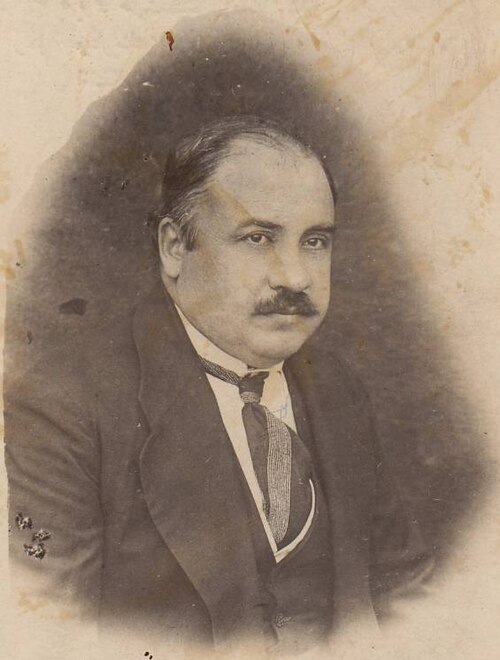
Bio: (1876–1924) Turkish sociologist. Ziya Gökalp (born Mehmed Ziya) was the first Turk to use Western sociological theory as a foundation of his thought. He taught sociology in the Thessaloniki lycée in 1910, and was the founder of a literary and cultural journal, Genç Kalemler, and of a political magazine, İslam Mecmuası. In the election of 1912 to the reestablished Ottoman parliament, Gökalp was elected as representative from Ergani. During World War I, he took up the role of ideological mouthpiece for the Young Turks.
Ziya Gökalp is regarded as the founder of a systematic theory of Turkish nationalism, developed in response to three major challenges facing the late Ottoman Empire: the reformist policy of Ottomanism, the idea of uniting all Muslims under Ottoman rule, and the emerging notion of rallying people around Turkish identity. Gökalp rejected the political role of the caliphate, arguing that it should remain a purely religious institution. His work sought to reconcile these competing pressures by grounding analysis in observable social realities rather than abstract ideology, criticizing earlier reforms like the Tanzimat for failing to fully grasp the depth of social and structural change, particularly the growing division of labor in modern society.
A central concept in Gökalp’s thought is the umma, or the global Islamic community. While he believed the traditional form of the umma could not survive unchanged in a modernizing empire, he argued it should persist in a modified, primarily religious form. He proposed preserving certain shared Islamic elements—such as the Arabic alphabet, common terminology, educational cooperation, and symbols like the crescent—to maintain unity among Muslims. At the same time, these changes would allow for the emergence of a new social form: the nation.
Gökalp explained the rise of the nation as a product of increasing social interaction (“social density”), which generates collective energy and reveals a society’s underlying ethos. This ethos, once integrated, forms a distinct culture (hars) expressed through language. Shared language, in turn, fosters unity in belief and identity, producing a community. Communication technologies played a crucial role in this transformation: newspapers helped create a shared public through vernacular language, while books fostered intellectual communities, laying the groundwork for broader international connections.
For Gökalp, a nation is an ethnic group that, after being fused within an empire, seeks to rediscover and revive its identity. This identity is rooted in a “social mind,” a collective consciousness that transcends individuals. Turkish identity, in his view, had been obscured by elite Ottoman culture and needed to be rediscovered through folk traditions, language reform, and cultural research. He advocated replacing the complex Ottoman written language with a simpler, vernacular Turkish and uncovering authentic cultural elements among the people.
Importantly, Gökalp did not see nationalism and Islam as incompatible. Turks would remain part of the Islamic umma while developing a modern national identity. He called this synthesis “up-to-date Turkism,” which combined cultural nationalism with religious continuity while rejecting practices falsely attributed to Islam.
Gökalp’s theory of social solidarity, influenced by Durkheim, emphasized cohesion as the foundation of society but incorporated a more authoritarian dimension. He supported private property only insofar as it served social solidarity, rejecting both unrestricted capitalism and radical socialism. Drawing on multiple European thinkers, Gökalp adapted concepts like collective consciousness to serve his vision of a cohesive, culturally grounded Turkish nation.
Main works
Turkism, Islamism and Modernism (1918);
Principles of Turkism (1923);
History of Turkish Civilization (1925);
Turkish Nationalism and Western Civilization (1959);