Chamberlain, Houston Stewart
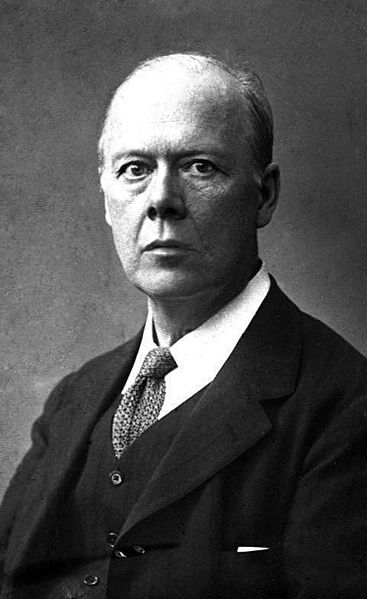
Bio: (1855–1927) British-German political philosopher. Chamberlain studied physics and natural sciences at the University of Geneva. His works are dedicated to preserving and uplifting Germanic culture, mainly by fighting the Jews, whom he saw as the main enemy of Germanic culture. According to Chamberlain, Jews are the destroyers of civilization and represent absolute evil, while Germans were the chosen people whose mission was to defeat the Jews and rescue civilization. In Foundations of the Nineteenth Century (1899), he argues that world history is shaped by the race struggle between the Aryan (Germanic) race, which created superior Western civilization and high-value culture, and the Semitic race, which is purely materialistic and without positive cultural values. Nations are political entities that are created by historical struggle between races, while the history of a nation is determined by its racial character. Chamberlain argues that the Catholic Church was created through Jewish influence, hence the Catholic Church always tried to undermine Germanic superiority. He also claims that Jesus Christ wasn’t a Jew, and that the true positive nature of Christianity was curtailed for over millennia, until Germanic thinkers such as Martin Luther rebelled against the Catholic Church, showed its negative influence, and redescover true and positive nature of Christianity. During the First World War, Chamberlain accused Britain of betraying the Germanic ideal and wrote pamphlets promoting Germany’s war cause. Near the end of his life, Chamberlain started promoting Adolf Hitler as the promised and prophesied leader that would reinvigorate Germany with the sprit neaded for it to become primery force in the world.
Fields of research
Art Christianity Culture Democracy Ethnicity History Morality Politics Power, Political Protestantism Race WarTheoretical approaches
Racist ApproachMain works
Richard Wagner (1895);
Foundations of the Nineteenth Century (1899);
Immanuel Kant (1905);
Goethe (1912);
The Ravings of a Renegade (1915);
Who is to blame for the War? (1915);
Political Ideals (1915);
England und Deutschland (1915);
Demokratie und Freiheit (1916);
Der Wille zum Sieg (1916);
Rasse und Nation (1918).