Chambliss, William
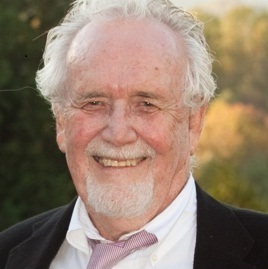
Bvio: (1933-2014) American sociologist. William Chambliss received his B.A. from the University of California, Los Angeles in 1955. Ph.D. from Indiana University in 1962, both in sociology. Chambliss' first academic position was at the University of Washington. In 1967, he followed Donald Cressey, one of his early mentors, to the University of California, Santa Barbara. He later taught at the University of Delaware before joining George Washington University in 1986.
Chambliss’ research work was conducted in parallel in archives, libraries, at scientific meetings, but also on the street, among poor, degraded people, criminals, government officials, and intelligence agents. In one paper, he highlights his research credo: moving through the streets, much more than in reports and archives, you can (among other things) understand the role of corruption as a cement that binds political, economic, and criminal interests.
Capitalism and the Class Character of Law
Chambliss approached criminology from a conflict perspective, rejecting the functionalist view. His early work, “A Sociological Analysis of the Law of Vagrancy” (1974), was heavily influenced by Marxist ideas. In it, he examined how, between the 14th and 16th centuries in England, many peasants were dispossessed of their land and became vagrants. Legal measures not only legitimized this dispossession but also served elite interests by transforming these individuals into a cheap, highly controlled labor force.
The class-based nature of law is further explored in “Law, Order, and Power” (1971, co-authored with Robert Seidman), where Chambliss argues that class interests shape not only legal rules but also the operation of the entire criminal justice system.
In his article “Towards a Political Economy of Crime” (1975), Chambliss identifies two key mechanisms of capitalist production: generating demand for unnecessary goods and maintaining a “reserve army” of unemployed workers. He presents criminal law as inherently class-based and argues that crime serves several social functions: it reduces excess labor (by incarcerating some individuals and employing others in control institutions), diverts the lower classes’ attention from their exploitation, and persists because it benefits those whose interests depend on its existence.
Discrimination in the Legal Process
In his well-known book Crime and the Legal Process (1969), and even more prominently in the article “The Saints and Roughnecks” (1976), Chambliss examines how lower-class individuals and Black Americans are treated within U.S. society, explaining why they are disproportionately represented in crime statistics compared to their share of the population.
In “The Saints and the Roughnecks,” he analyzes two groups of high school students. The first group, which he labels the “Saints,” consisted of white, upper-middle-class boys from stable and affluent families. They were active in school activities and performed well academically. Despite engaging in various delinquent behaviors—such as drinking in public, reckless driving, minor theft, and vandalism—none of them acquired a criminal record or were arrested during the two years of observation.
The second group, referred to as the “Roughnecks,” included boys from lower-class, working-class families. They were involved in similar activities, including fighting, theft, and drinking. However, unlike the “Saints,” they frequently encountered trouble with both the police and their local community. This disparity occurred even though the level of delinquency in both groups was roughly the same.
Organized Crime and Politics
In their 1979 article “Miners, Tailors and Teamsters: Business Racketeering and Trade Unionism,” Chambliss and Alan Block examine the connections between legitimate business and the criminal underworld within the labor market. Focusing on the control of trade unions and the dismantling of the Teamsters’ support fund, they argue that a clear boundary between organized crime and lawful enterprise has never truly existed.
Chambliss also made a significant contribution to the study of organized crime through his research on its structure. Using participant observation in Seattle, he reached two key conclusions: first, that organized crime in the city was not controlled by the Mafia; and second, that it involved a broad network of businesspeople, politicians, and criminal justice officials operating within what he described as an “underground, invisible industry.” This network revolved around activities such as illegal gambling, drug trade, loan sharking, fraud, and prostitution.
Rather than being a tightly organized hierarchy, this system functioned through loose connections among individuals in business, politics, and the justice system who cooperated to produce and distribute illicit goods and services for profit. Financiers and organizers played central roles, forming flexible “crime networks” aimed primarily at financial gain. Chambliss’s findings challenged the idea of a centralized organization like Cosa Nostra, instead portraying participants in organized crime as socially respectable individuals holding influential positions in legitimate institutions.
In his later article “State-Organized Crime” (1989), Chambliss argued that some activities carried out by state agents meet the criteria of organized crime. He cited examples such as arms smuggling (including the Iran–Contra affair of the 1980s), political assassinations, illegal surveillance, the harassment of groups labeled “anti-American,” and unethical human experimentation. His work suggested that official campaigns against organized crime can sometimes serve as propaganda or as a way to shield state involvement in covert illegal activities. Chambliss was also a prominent critic of the U.S. “war on drugs,” which he viewed as an ineffective and wasteful use of public resources.
Fields of research
Capitalism City Classes Crime Discrimination Elites Law Politics Power, Political Prisons Professions Race State Unemployment WorkTheoretical approaches
Marxism – Historical MaterialismMain works
“A sociological analysis of the law of vagrancy”, Social Problems (1964);
Crime and Legal Process (1969);
Law, order and Power (1971);
“Toward a Political Economy of Crime”, in Theory and Society (1975);
“The Saints and Roughnecks”, in Chambliss W. and Mankoff M. (eds.) Whose Law? What Order? A Conflict Approach to Criminology (1976);
“Miners, Tailors and Teamsters: Business Racketeering and Trade Unionism”, in Crime and Social Justice (1979);
On the Take: From Petty Crooks to Presidents (1988);
“State-organized crime”, in Criminology (1989).